Egypt – The Sinai Desert Trail –
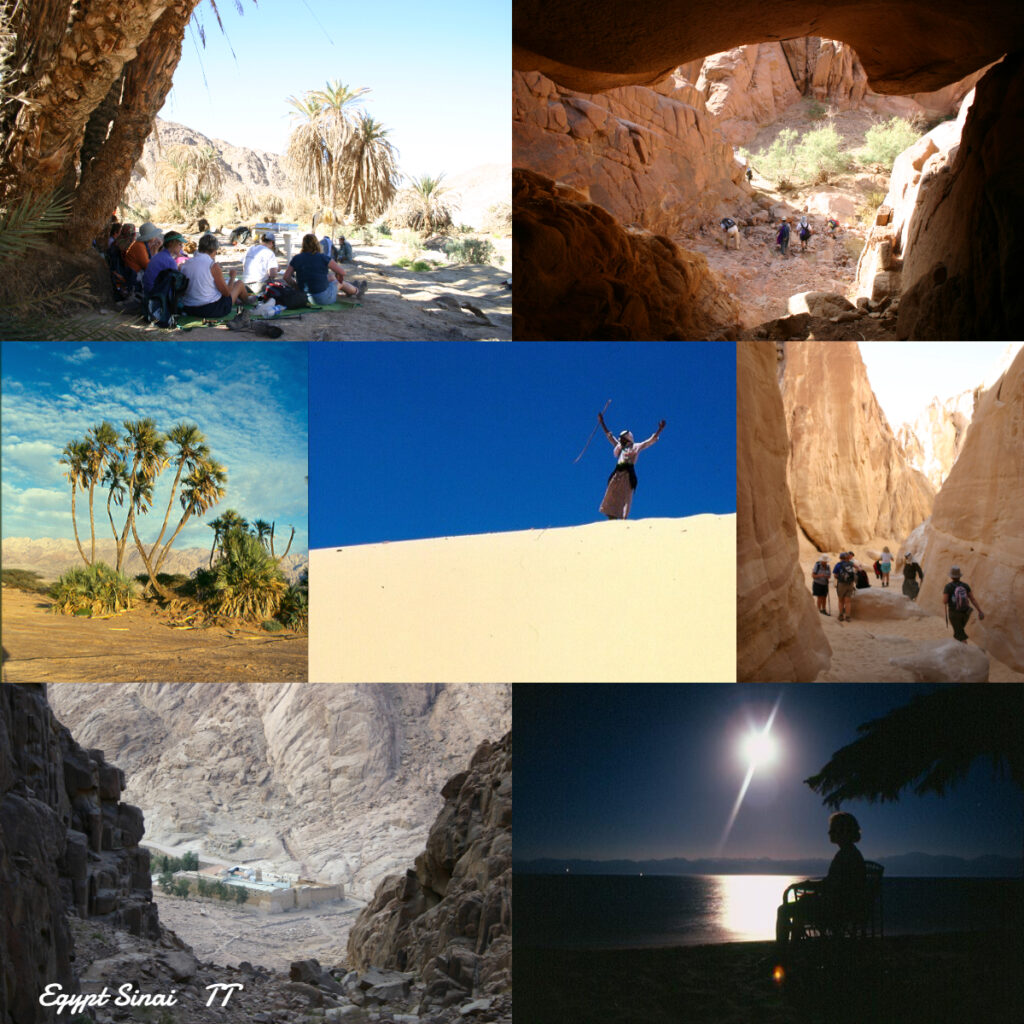
The Sinai Desert forms the vast arid heart of Egypt’s Sinai Peninsula. It is a land bridge between Africa and Asia, known for its rugged mountains, sweeping dunes, and deep historical and religious significance. It stretches between the Mediterranean Sea in the north and the Red Sea in the south, with landscapes ranging from barren plains to dramatic granite peaks.
Sinai’s landscape is shaped by ancient volcanic activity (granite mountains), tectonic rifting (Red Sea and Gulf of Aqaba) and wind and water erosion (sandstone canyons like the Coloured Canyon). The Sinai Desert is one of the most striking and varied desert regions in the Middle East, a place where mountains, plateaus, wadis, and coastlines collide.
The Sinai forms a natural bridge between Africa and Asia, which is why it has been a crossroads of civilizations for thousands of years. Its geography is the key to understanding its culture, and its great historical, religious and spiritual significance. St. Catherine’s Monastery is one of the oldest Christian monasteries whilst adjacent Mount Catherine is the highest mountain in Egypt (2,629m). This region feels almost like another planet, rugged, spiritual, and visually stunning.
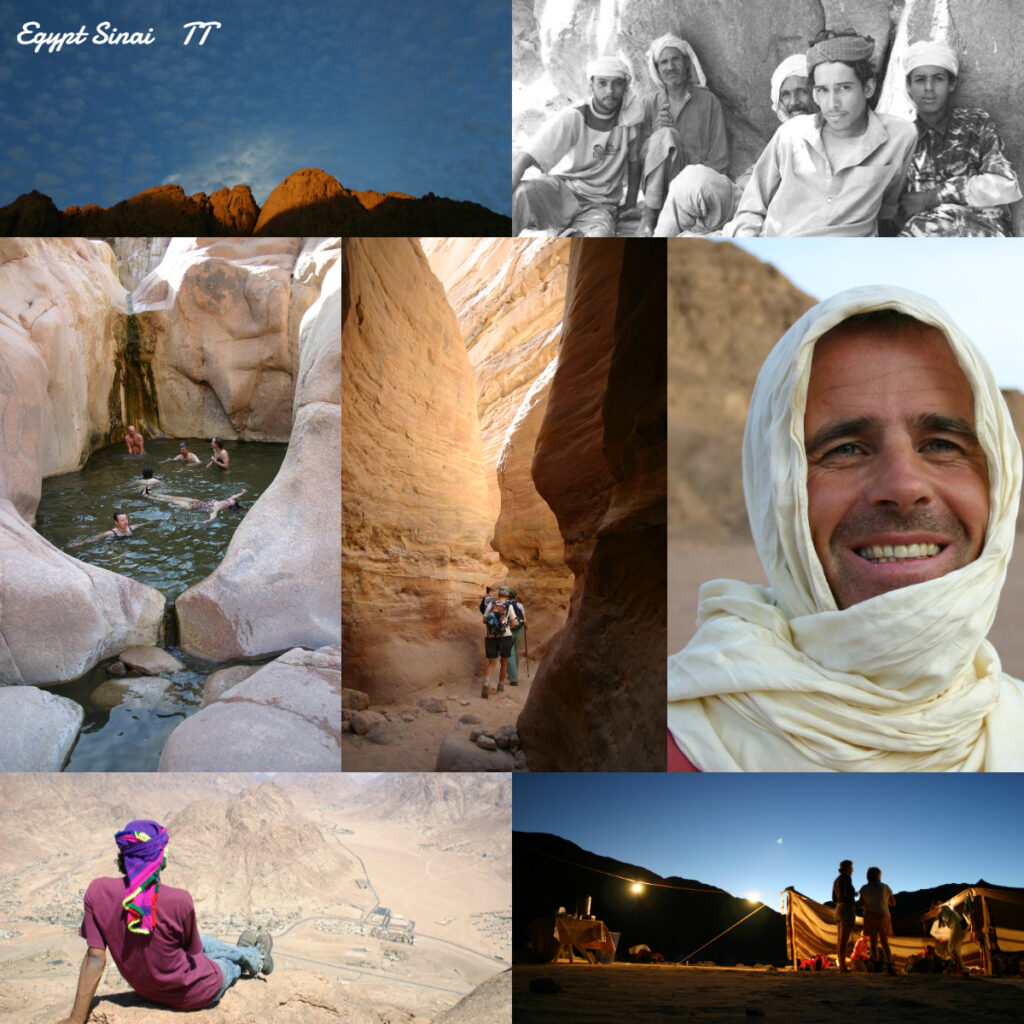
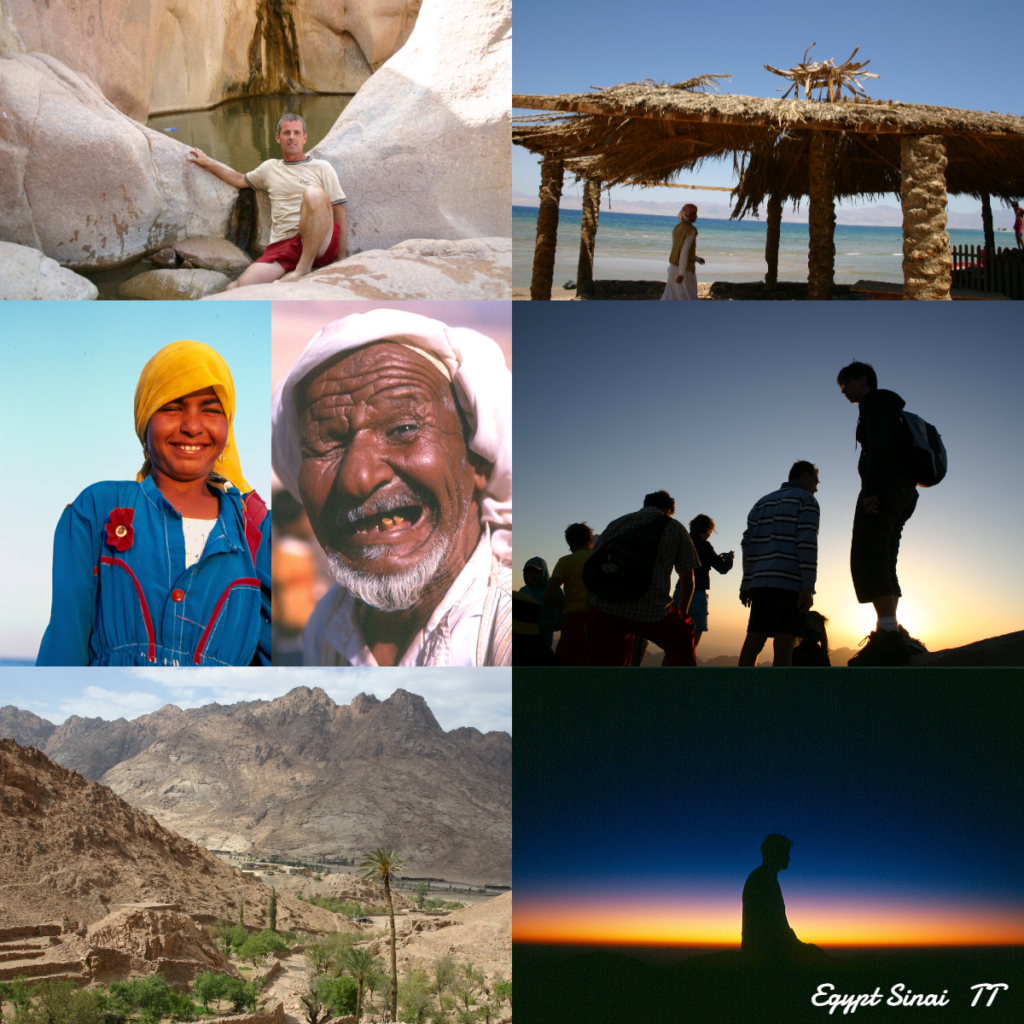
The Sinai Bedouin, in particular, have a distinct identity shaped by centuries of life between mountains, wadis, and the Red Sea. Bedouin culture isn’t just a lifestyle, it’s a worldview shaped by desert landscapes, tribal bonds, oral tradition, and a profound sense of hospitality.
Trail history
Probably that area most hiked and trekked by me. Many treks with many groups of various nationalities in the High Sinai mountains in Summer and the East Sinai canyons and wadis in winter, spring and autumn. The last trek dates back to 2008. Since then, bureaucratic restrictions were put in place and proper trekking became something of the past.
Future trails
The scenery, variety and possibilities are unmatched. The treks themselves can easily be combined with a few relaxing days at the Red Sea, or a visit to Cairo etc. Currently no new dates have been set, I remain hopeful that trekking will be possible in the future again.
Egypt – The Sinai Desert Trail –
The Sinai Desert forms the vast arid heart of Egypt’s Sinai Peninsula. It is a land bridge between Africa and Asia, known for its rugged mountains, sweeping dunes, and deep historical and religious significance. It stretches between the Mediterranean Sea in the north and the Red Sea in the south, with landscapes ranging from barren plains to dramatic granite peaks.
Sinai’s landscape is shaped by ancient volcanic activity (granite mountains), tectonic rifting (Red Sea and Gulf of Aqaba) and wind and water erosion (sandstone canyons like the Coloured Canyon). The Sinai Desert is one of the most striking and varied desert regions in the Middle East, a place where mountains, plateaus, wadis, and coastlines collide.
The Sinai forms a natural bridge between Africa and Asia, which is why it has been a crossroads of civilizations for thousands of years. Its geography is the key to understanding its culture, and its great historical, religious and spiritual significance. St. Catherine’s Monastery is one of the oldest Christian monasteries whilst adjacent Mount Catherine is the highest mountain in Egypt (2,629m). This region feels almost like another planet, rugged, spiritual, and visually stunning.
The Sinai Bedouin, in particular, have a distinct identity shaped by centuries of life between mountains, wadis, and the Red Sea. Bedouin culture isn’t just a lifestyle, it’s a worldview shaped by desert landscapes, tribal bonds, oral tradition, and a profound sense of hospitality.
Trail history
Probably that area most hiked and trekked by me. Many treks with many groups of various nationalities in the High Sinai mountains in Summer and the East Sinai canyons and wadis in winter, spring and autumn. The last trek dates back to 2008. Since then, bureaucratic restrictions were put in place and proper trekking became something of the past.
Future trails
The scenery, variety and possibilities are unmatched. The treks themselves can easily be combined with a few relaxing days at the Red Sea, or a visit to Cairo etc. Currently no new dates have been set, I remain hopeful that trekking will be possible in the future again.