Jordan – The Petra Trail –
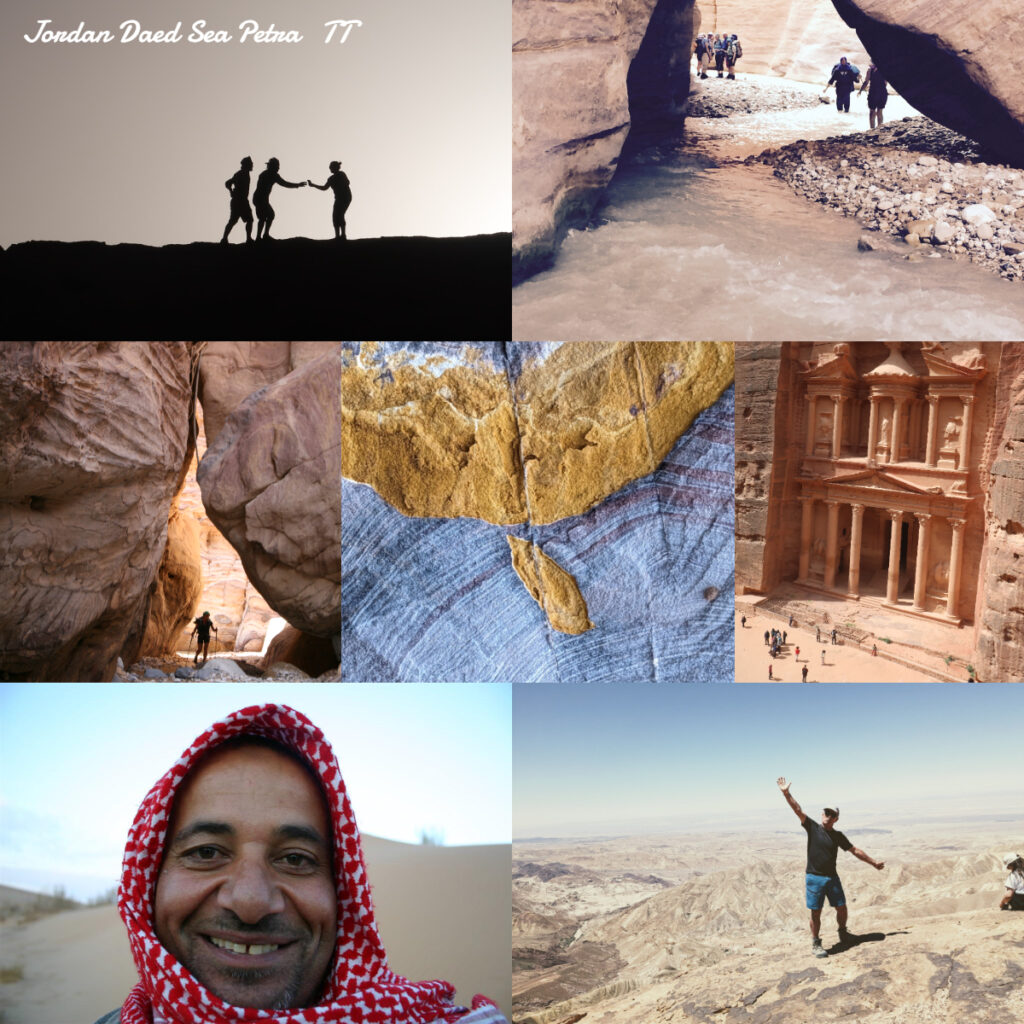
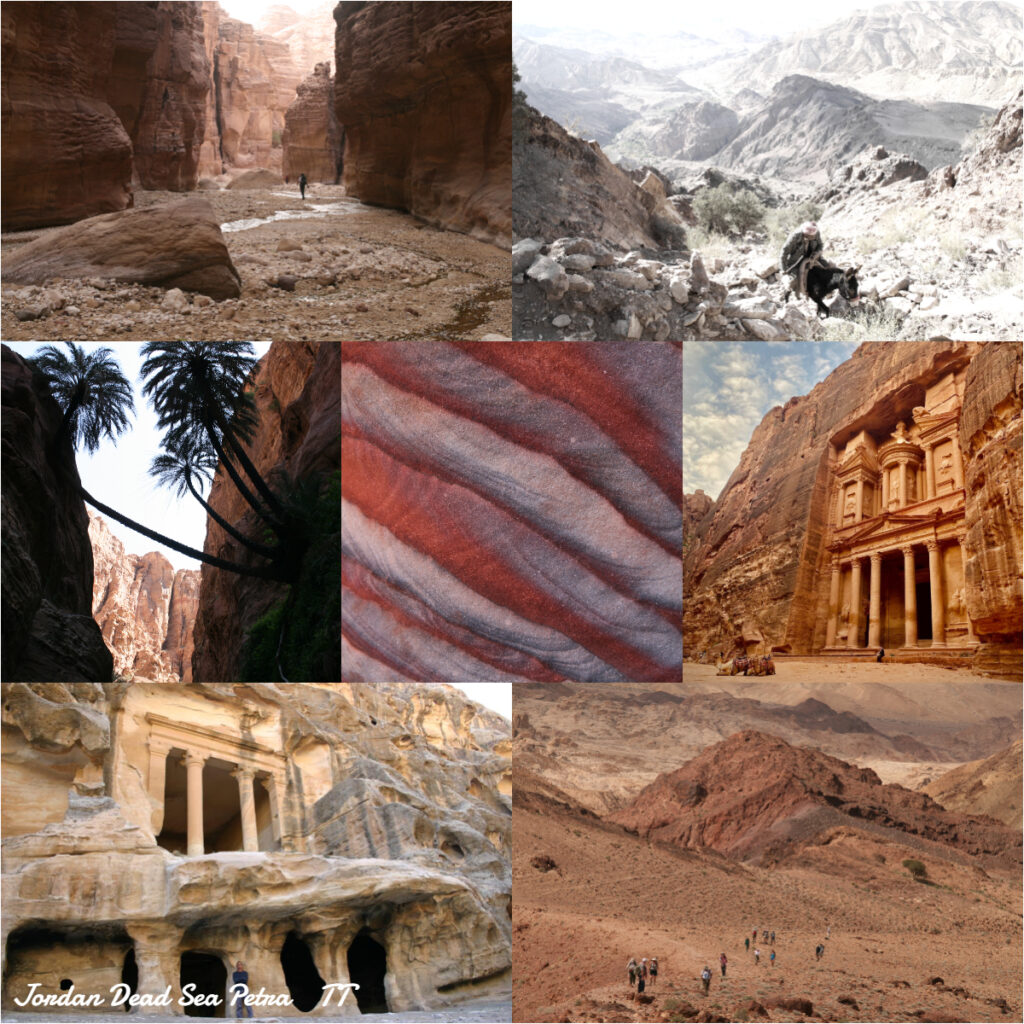
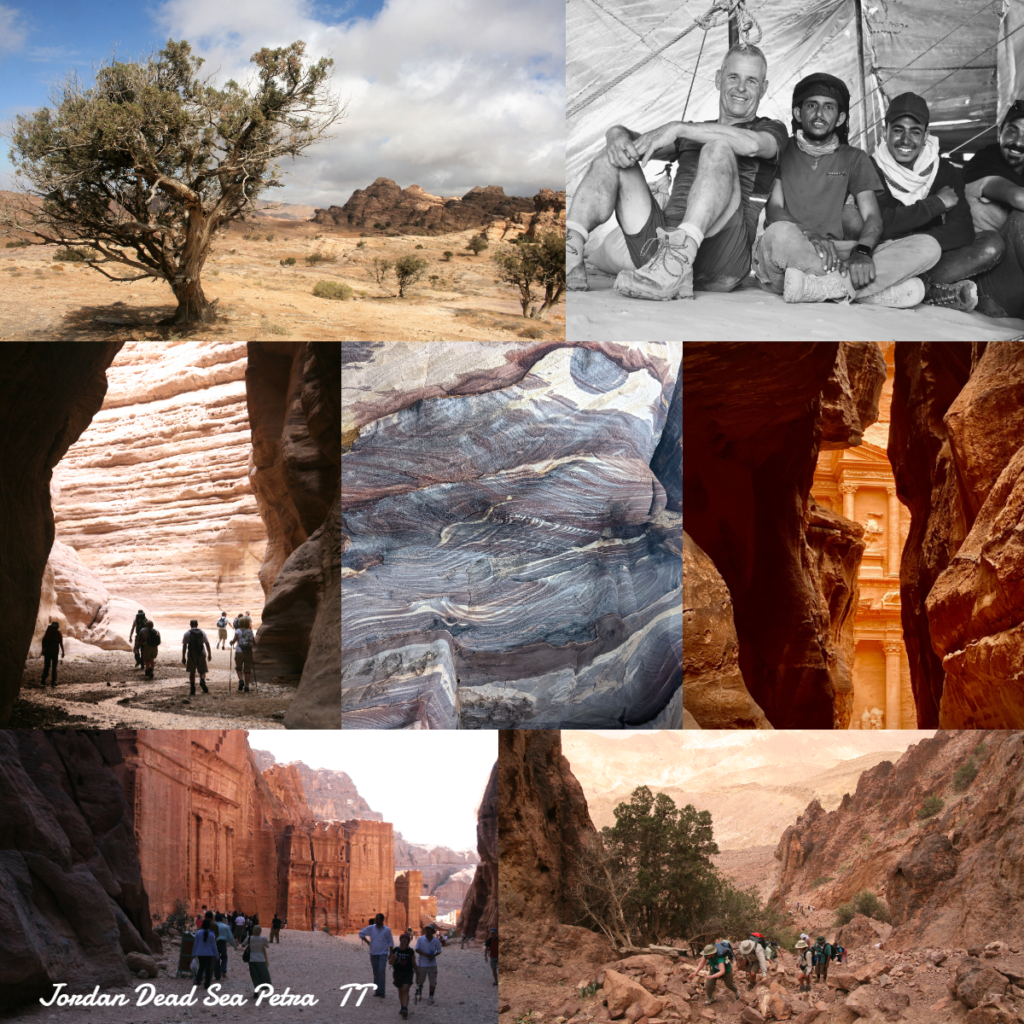
Petra was the ancient and marvellous Nabatean city carved directly into rose-coloured sandstone cliffs, located at the crossroads of major trade routes connecting Arabia, Egypt, Syria, and the Mediterranean. The Shara mountains are a range in the Dead Sea Rift Valley; they shape the entire landscape around Petra and create the rugged sandstone plateau into which Petra is carved. Erosion shaped the mountains into mesas, domes, canyons and narrow gorges and formed classic Petra topography. A hiker’s paradise.
The Araba valley forms the land bridge between the Dead Sea and Red Sea. This valley is part of the bigger Dead Sea Valley which is again part of the much bigger Syrian – African rift system. The latter is an almost 7000km long scar on the earth’s surface and contains some of the most dramatic landscapes in the world; from the Dead Sea and Red Sea all the way down to Mount Kenya, Mount Kilimanjaro etc. The mountains east of the Arabah Valley near Petra are known as the Shara Mountains, they form one of Jordan’s most striking and historically important mountain ranges. They are mainly composed of Nubian sandstone, the same rock that makes Petra’s monuments possible, but also reveal patches of igneous, volcanic and sedimentary rock. The contrast between the green highlands and the dry Arabah valley below is dramatic.
The wider Petra region is a vast area of canyons, mountains, valleys, ancient monuments and hidden valleys. Like Wadi Rum, it is a UNESCO world heritage site and one of the new seven wonders of the world. The Nabataeans, a nomadic Arab people, settled in Petra in the 4th century BCE, transforming it into the capital of their kingdom. They mastered water management, stone carving, and desert survival, enabling them to thrive in a harsh environment. Petra became a wealthy hub of the incense and spice trade, linking Arabia with Egypt, Syria, and the Mediterranean. Petra continued to prosper under Roman rule but a devastating earthquake in 363 CE destroyed many structures and contributed to the city’s decline. In 1812, Swiss explorer Johann Ludwig Burckhardt rediscovered Petra for the Western world and today Petra is Jordan’s most visited attraction.
Highlights
The mountains and the end destination of Petra, one of the 7 new wonders of the world. They mountains rise dramatically from the Arabah Valley, reaching 1,500–1,700 m. You get an insight in the Bedouin way of life and there will be unforgettable nights under the stars. We will encounter some of the best scenery ever witnessed on a trek, from deep cut canyons, challenging climbs, ancient hiking trails etc.
Trail history
May 2008, June 2009 and April 2017, German groups in cooperation with Wuestenwanderer.de
October 2022, a British Tt group.
Itinerary
Normally a 7- or 8-day itinerary but this can be expanded. The starting point can be at different places, either down in the valley or higher up in the mountains already. We always finish at Petra, with ample opportunities to further explore this amazing world class site.
Future trails
We aim to organise a trek in Jordan every second year, either Wadi Rum & Petra or Dead Sea Valley & Petra. An amazing Wadi Rum & Jordan Trek is planned for early 2027.
Jordan – The Petra Trail –
Petra was the ancient and marvellous Nabatean city carved directly into rose-coloured sandstone cliffs, located at the crossroads of major trade routes connecting Arabia, Egypt, Syria, and the Mediterranean. The Shara mountains are a range in the Dead Sea Rift Valley; they shape the entire landscape around Petra and create the rugged sandstone plateau into which Petra is carved. Erosion shaped the mountains into mesas, domes, canyons and narrow gorges and formed classic Petra topography. A hiker’s paradise.
The Araba valley forms the land bridge between the Dead Sea and Red Sea. This valley is part of the bigger Dead Sea Valley which is again part of the much bigger Syrian – African rift system. The latter is an almost 7000km long scar on the earth’s surface and contains some of the most dramatic landscapes in the world; from the Dead Sea and Red Sea all the way down to Mount Kenya, Mount Kilimanjaro etc. The mountains east of the Arabah Valley near Petra are known as the Shara Mountains, they form one of Jordan’s most striking and historically important mountain ranges. They are mainly composed of Nubian sandstone, the same rock that makes Petra’s monuments possible, but also reveal patches of igneous, volcanic and sedimentary rock. The contrast between the green highlands and the dry Arabah valley below is dramatic.
The wider Petra region is a vast area of canyons, mountains, valleys, ancient monuments and hidden valleys. Like Wadi Rum, it is a UNESCO world heritage site and one of the new seven wonders of the world. The Nabataeans, a nomadic Arab people, settled in Petra in the 4th century BCE, transforming it into the capital of their kingdom. They mastered water management, stone carving, and desert survival, enabling them to thrive in a harsh environment. Petra became a wealthy hub of the incense and spice trade, linking Arabia with Egypt, Syria, and the Mediterranean. Petra continued to prosper under Roman rule but a devastating earthquake in 363 CE destroyed many structures and contributed to the city’s decline. In 1812, Swiss explorer Johann Ludwig Burckhardt rediscovered Petra for the Western world and today Petra is Jordan’s most visited attraction.
Highlights
The mountains and the end destination of Petra, one of the 7 new wonders of the world. They mountains rise dramatically from the Arabah Valley, reaching 1,500–1,700 m. You get an insight in the Bedouin way of life and there will be unforgettable nights under the stars. We will encounter some of the best scenery ever witnessed on a trek, from deep cut canyons, challenging climbs, ancient hiking trails etc.
Trail history
May 2008, June 2009 and April 2017, German groups in cooperation with Wuestenwanderer.de
October 2022, a British Tt group.
Itinerary
Normally a 7- or 8-day itinerary but this can be expanded. The starting point can be at different places, either down in the valley or higher up in the mountains already. We always finish at Petra, with ample opportunities to further explore this amazing world class site.
Future trails
We aim to organise a trek in Jordan every second year, either Wadi Rum & Petra or Dead Sea Valley & Petra. An amazing Wadi Rum & Jordan Trek is planned for early 2027.