Jordan – The Wadi Rum & Petra Trail –
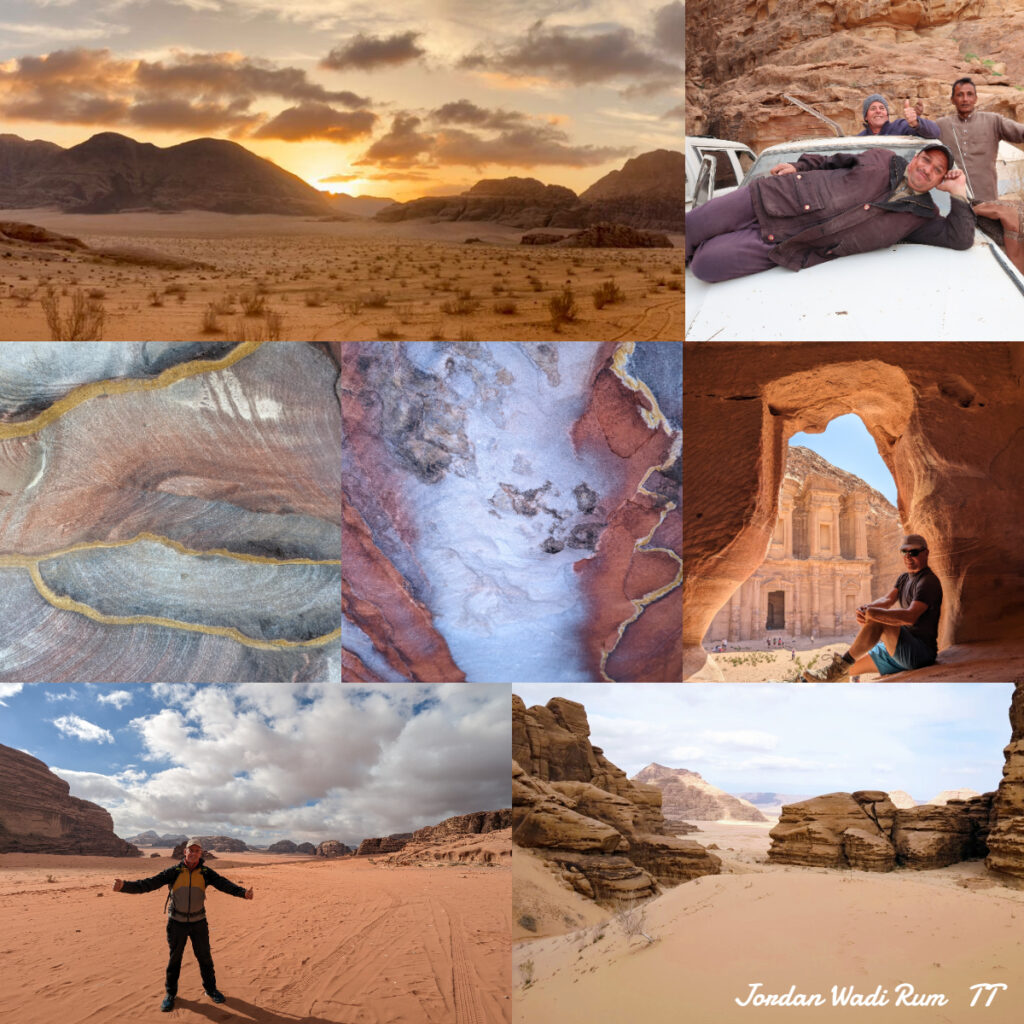
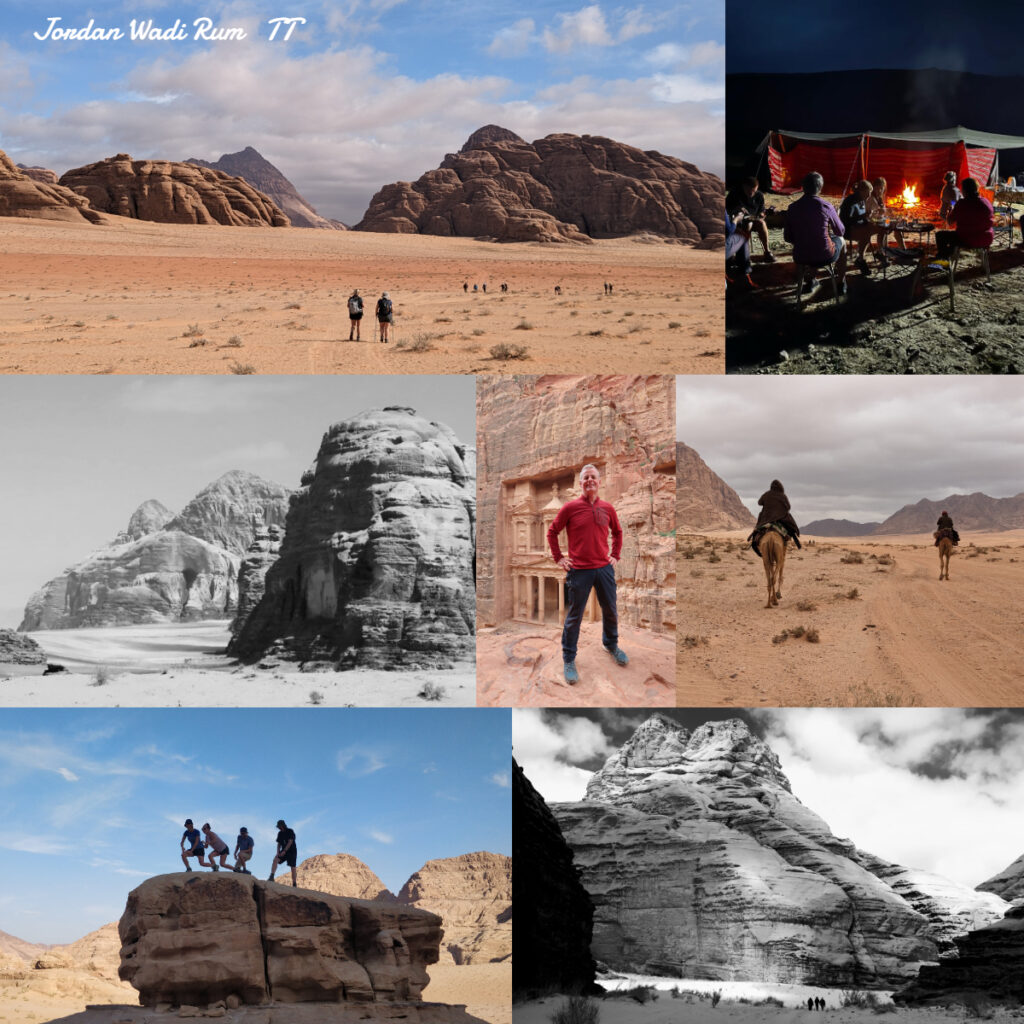
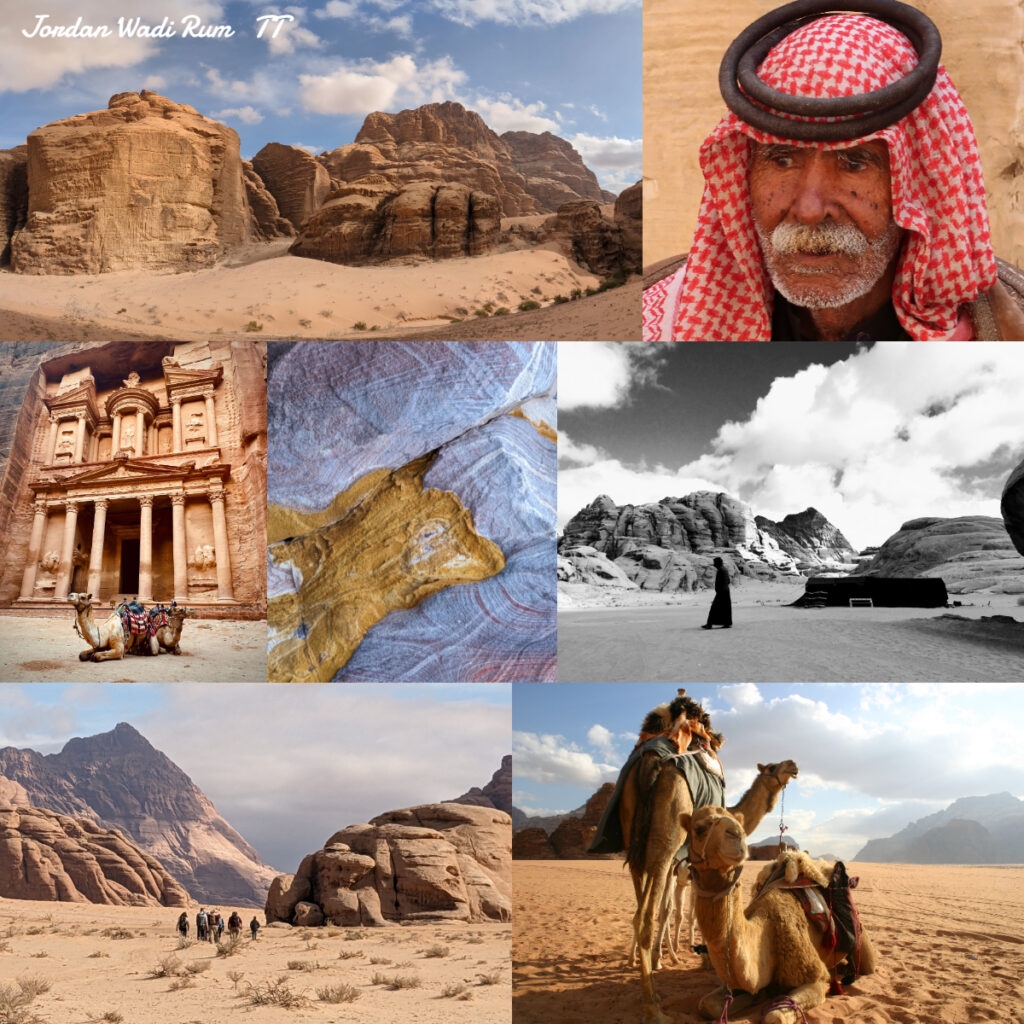
Wadi Rum is a desert of red sand, towering sandstone mountains and vertical cliffs, adjacent to the Saudi border. It is a UNESCO world heritage site, known for its natural beauty and its Mars-like landscapes.
Wadi Rum is a 720 km2 protected desert area in southern Jordan, often called the valley of the moon. The landscape was shaped over millions of years through tectonic uplift, erosion, and desert winds. Massive sandstone and granite mountains were pushed upward and sculpted into arches, canyons, and mesas. Floods carved the wadis, leaving behind smooth valleys and dramatic rock formations. Human activity in Wadi Rum dates back around 12,000 years and thousands of inscriptions show the presence of early nomadic groups. The Nabataeans (builders of Petra) used Wadi Rum as part of their trade network. After the Roman annexation of the Nabataean Kingdom, the trade routes shifted to different areas. For centuries now, Wadi Rum has been home to Bedouin tribes, especially the Zalabia.
Petra was the ancient and marvellous Nabatean city carved directly into rose-coloured sandstone cliffs, located at the crossroads of major trade routes connecting Arabia, Egypt, Syria, and the Mediterranean. Rather than a city only, it is a vast area of canyons, mountains, valleys, ancient monuments and hidden valleys. Like Wadi Rum it is a UNESCO world heritage site and one of the new seven wonders of the world.
The Nabataeans, a nomadic Arab people, settled in Petra in the 4th century BCE, transforming it into the capital of their kingdom. They mastered water management, stone carving, and desert survival, enabling them to thrive in a harsh environment. Petra became a wealthy hub of the incense and spice trade, linking Arabia with Egypt, Syria, and the Mediterranean. In 106 CE, the Romans annexed the Nabataean Kingdom, renaming it Arabia Petraea. Petra continued to prosper under Roman rule. A devastating earthquake in 363 CE destroyed many structures and contributed to the city’s decline. Petra is often called the “Rose-Red City” because of the colour of its sandstone cliffs. In 1812, Swiss explorer Johann Ludwig Burckhardt rediscovered Petra for the Western world and today Petra is Jordan’s most visited attraction.
Highlights
Hiking and trekking are by far the best ways to explore these unique landmarks. The main hiking experience is focussed on the Wadi Rum desert area, where we will concentrate our trekking to the eastern parts of this unique desert area. It is an area of sheer, vertical towering sandstone rocks, dwarfing the unique red sanded wadies and dunes. An almost pristine desert trek environment with vast empty areas where we camp under the still and starry sky. After our multiple day Rum trek, we will transfer to Petra where we enjoy at least 2 more day of exploring Petra by foot. Here we will not only see the major landmarks but also veer of to further experience hidden corners and valleys. In Wadi Rum we camp, in Petra we will enjoy hotel accommodation.
Itinerary
A standard itinerary will be 7 or 8 days, which gives you ample of time to explore Wadi Rum and Petra on foot. Start and finish will be either in Amman or Aqaba.
Trail history
October 2011, a German group in cooperation with Wuestenwanderer.de
February 2010, November 2019, March 2022 (twice) and March 2023, British Tt groups.
Future trails
There is another Wadi Rum – Petra Trail planned for February 2027.
Jordan – The Wadi Rum & Petra Trail –
Wadi Rum is a desert of red sand, towering sandstone mountains and vertical cliffs, adjacent to the Saudi border. It is a UNESCO world heritage site, known for its natural beauty and its Mars-like landscapes.
Wadi Rum is a 720 km2 protected desert area in southern Jordan, often called the valley of the moon. The landscape was shaped over millions of years through tectonic uplift, erosion, and desert winds. Massive sandstone and granite mountains were pushed upward and sculpted into arches, canyons, and mesas. Floods carved the wadis, leaving behind smooth valleys and dramatic rock formations. Human activity in Wadi Rum dates back around 12,000 years and thousands of inscriptions show the presence of early nomadic groups. The Nabataeans (builders of Petra) used Wadi Rum as part of their trade network. After the Roman annexation of the Nabataean Kingdom, the trade routes shifted to different areas. For centuries now, Wadi Rum has been home to Bedouin tribes, especially the Zalabia.
Petra was the ancient and marvellous Nabatean city carved directly into rose-coloured sandstone cliffs, located at the crossroads of major trade routes connecting Arabia, Egypt, Syria, and the Mediterranean. Rather than a city only, it is a vast area of canyons, mountains, valleys, ancient monuments and hidden valleys. Like Wadi Rum it is a UNESCO world heritage site and one of the new seven wonders of the world.
The Nabataeans, a nomadic Arab people, settled in Petra in the 4th century BCE, transforming it into the capital of their kingdom. They mastered water management, stone carving, and desert survival, enabling them to thrive in a harsh environment. Petra became a wealthy hub of the incense and spice trade, linking Arabia with Egypt, Syria, and the Mediterranean. In 106 CE, the Romans annexed the Nabataean Kingdom, renaming it Arabia Petraea. Petra continued to prosper under Roman rule. A devastating earthquake in 363 CE destroyed many structures and contributed to the city’s decline. Petra is often called the “Rose-Red City” because of the colour of its sandstone cliffs. In 1812, Swiss explorer Johann Ludwig Burckhardt rediscovered Petra for the Western world and today Petra is Jordan’s most visited attraction.
Highlights
Hiking and trekking are by far the best ways to explore these unique landmarks. The main hiking experience is focussed on the Wadi Rum desert area, where we will concentrate our trekking to the eastern parts of this unique desert area. It is an area of sheer, vertical towering sandstone rocks, dwarfing the unique red sanded wadies and dunes. An almost pristine desert trek environment with vast empty areas where we camp under the still and starry sky. After our multiple day Rum trek, we will transfer to Petra where we enjoy at least 2 more day of exploring Petra by foot. Here we will not only see the major landmarks but also veer of to further experience hidden corners and valleys. In Wadi Rum we camp, in Petra we will enjoy hotel accommodation.
Itinerary
A standard itinerary will be 7 or 8 days, which gives you ample of time to explore Wadi Rum and Petra on foot. Start and finish will be either in Amman or Aqaba.
Trail history
October 2011, a German group in cooperation with Wuestenwanderer.de
February 2010, November 2019, March 2022 (twice) and March 2023, British Tt groups.
Future trails
There is another Wadi Rum – Petra Trail planned for February 2027.