Morocco – The Saghro Mountains & Rose Valley Trail –
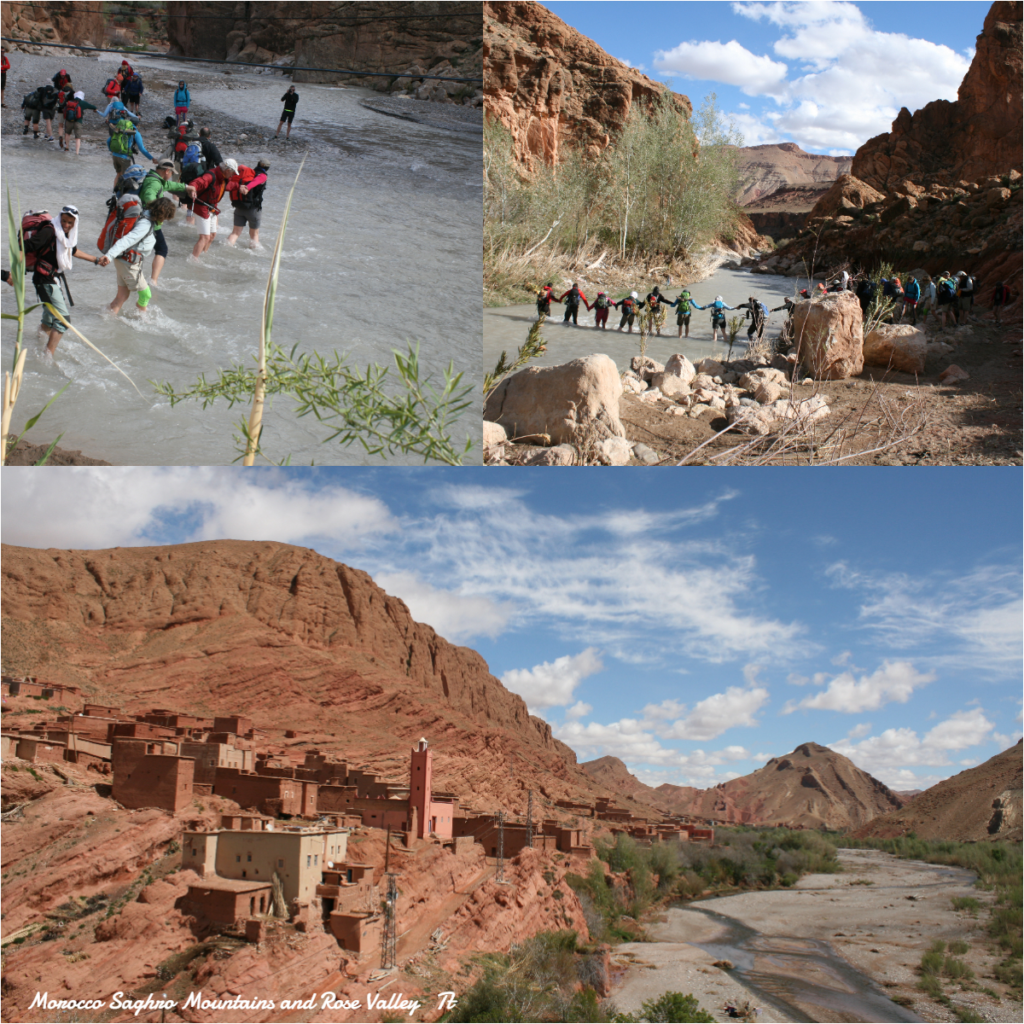
The Saghro Mountains (Jbel Saghro) form the eastern extension of the Anti‑Atlas and sit south of the High Atlas and north of the Draa Valley. This massif has its highest peak at 2,700m, is known for being the driest mountain region in the entire Atlas system and connects to the Rose Valley. The Saghro Mountains are Morocco’s wild volcanic heart between the Atlas and the Sahara, shaped by millions of years of erosion. We will find sharp basalt pinnacles, rocky plateaus, deep canyons and surreal lunar landscapes. Rainfall ranges from 100 mm on the southern slopes to 300 mm at the summits — extremely dry even by Moroccan standards. It is the traditional homeland of the Aït Atta, one of Morocco’s most renowned Berber tribes. Many families are still semi‑nomadic, wintering in Saghro and migrating to Aït Bouguemez in summer with their flocks. This makes the Saghro one of the last places in Morocco where you can still encounter authentic nomadic life.
The Rose Valley is carved by the Assif M’Goun river and is famous for its pink Damascus roses, dramatic landscapes and authentic Berber life. It forms part of the Route of a Thousand Kasbahs, one of Morocco’s most scenic drives.
The Rose Valley lies about 100 km northeast of Ouarzazate and roughly 5 hours from Marrakech. Each April and May, millions of Damask roses (Rosa Damascena) bloom, filling the valley with fragrance and colour. Local women harvest the roses by hand at dawn; they are processed in Kalaat M’Gouna into rose water, essential oils, creams, and perfumes exported worldwide. The roses were introduced centuries ago, likely by traders from Persia along caravan routes. These days it is a place where traditional Berber life continues naturally, not staged for tourism.
Highlights
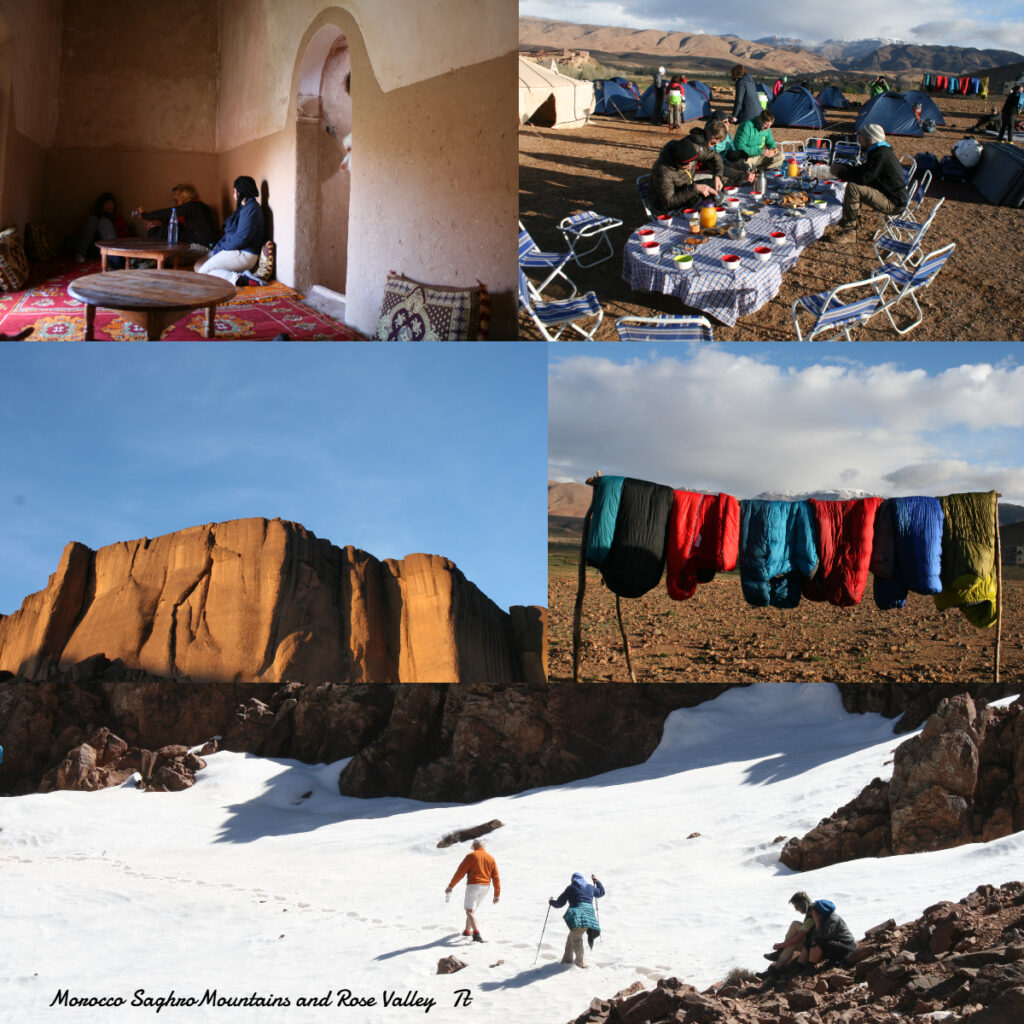
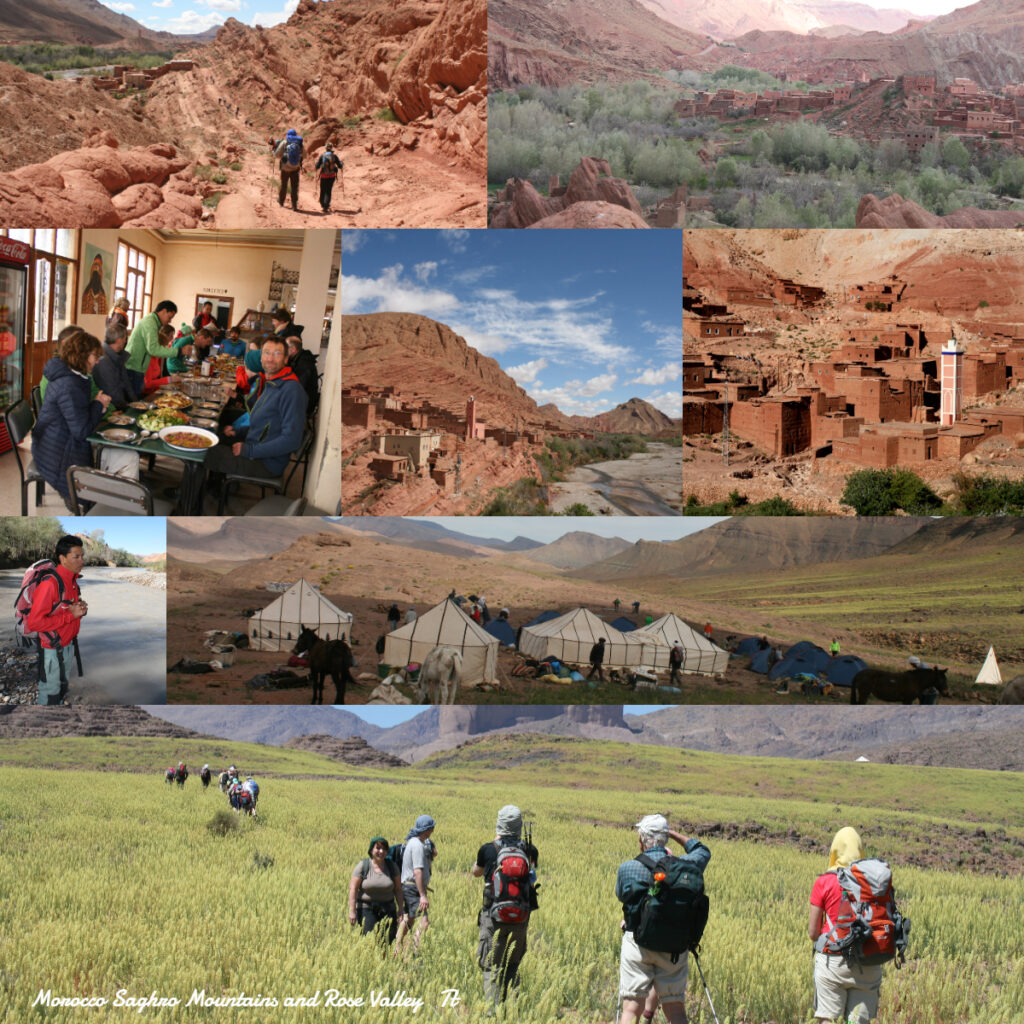
A mix of different types of accommodation which gives this tour an exciting touch and a real feel of the area. We stay in comfortable Riads, camp in the mountains and the valley but also stay in a local guesthouses, in a Berber village. The mountains are wild, remote, and quiet, it is a geological drama and a photographer’s dream. The valley has cultural depth, a vivid blend of nature, culture, and Berber tradition. It makes sense to connect both areas in a beautiful and comprehensive trek, combining the mountains with the valley and getting the best out of these 2 different worlds. All easily in reach from Marrakech by road.
Itinerary
10 or 11 days with start and finish in Marrakech.
Trail history
March 2015 and April 2026, a German group in cooperation with Wuestenwanderer.de
Future trails
We are planning a tour again in April 2027.
Morocco – The Saghro Mountains & Rose Valley Trail –
The Saghro Mountains (Jbel Saghro) form the eastern extension of the Anti‑Atlas and sit south of the High Atlas and north of the Draa Valley. This massif has its highest peak at 2,700m, is known for being the driest mountain region in the entire Atlas system and connects to the Rose Valley. The Saghro Mountains are Morocco’s wild volcanic heart between the Atlas and the Sahara, shaped by millions of years of erosion. We will find sharp basalt pinnacles, rocky plateaus, deep canyons and surreal lunar landscapes. Rainfall ranges from 100 mm on the southern slopes to 300 mm at the summits — extremely dry even by Moroccan standards. It is the traditional homeland of the Aït Atta, one of Morocco’s most renowned Berber tribes. Many families are still semi‑nomadic, wintering in Saghro and migrating to Aït Bouguemez in summer with their flocks. This makes the Saghro one of the last places in Morocco where you can still encounter authentic nomadic life.
The Rose Valley is carved by the Assif M’Goun river and is famous for its pink Damascus roses, dramatic landscapes and authentic Berber life. It forms part of the Route of a Thousand Kasbahs, one of Morocco’s most scenic drives.
The Rose Valley lies about 100 km northeast of Ouarzazate and roughly 5 hours from Marrakech. Each April and May, millions of Damask roses (Rosa Damascena) bloom, filling the valley with fragrance and colour. Local women harvest the roses by hand at dawn; they are processed in Kalaat M’Gouna into rose water, essential oils, creams, and perfumes exported worldwide. The roses were introduced centuries ago, likely by traders from Persia along caravan routes. These days it is a place where traditional Berber life continues naturally, not staged for tourism.
Highlights
A mix of different types of accommodation which gives this tour an exciting touch and a real feel of the area. We stay in comfortable Riads, camp in the mountains and the valley but also stay in a local guesthouses, in a Berber village. The mountains are wild, remote, and quiet, it is a geological drama and a photographer’s dream. The valley has cultural depth, a vivid blend of nature, culture, and Berber tradition. It makes sense to connect both areas in a beautiful and comprehensive trek, combining the mountains with the valley and getting the best out of these 2 different worlds. All easily in reach from Marrakech by road.
Itinerary
10 or 11 days with start and finish in Marrakech.
Trail history
March 2015 and April 2026, a German group in cooperation with Wuestenwanderer.de
Future trails
We are planning a tour again in April 2027.