Namibia – The Grand Trail –
Namibia is one of Africa’s most dramatic and visually striking countries, defined by the world’s oldest desert, towering red dunes, wildlife-rich savannas, and a haunting Atlantic coastline. It is one of the largest yet least densely populated countries on Earth.
Namibia’s location is in Southwestern Africa, bordering Angola, Zambia, Botswana, South Africa, and the Atlantic Ocean. Namibia’s history moves from ancient hunter‑gatherer cultures to German colonization, South African rule, a long independence struggle and finally independence in 1990. Since independence, Namibia has been politically stable, with steady economic growth driven by mining, tourism, and conservation. Its landscapes feel almost otherworldly—perfect for somebody who loves wide horizons, silence, and raw natural beauty. The Namib desert is considered the oldest desert in the world, with arid conditions lasting 55–80 million years. It is home to the Namib Sand Sea, with dunes over 300 meters high and features the Skeleton Coast, known for shipwrecks, fog, and dramatic emptiness. Despite its aridity, Namibia is rich in wildlife.
Highlights
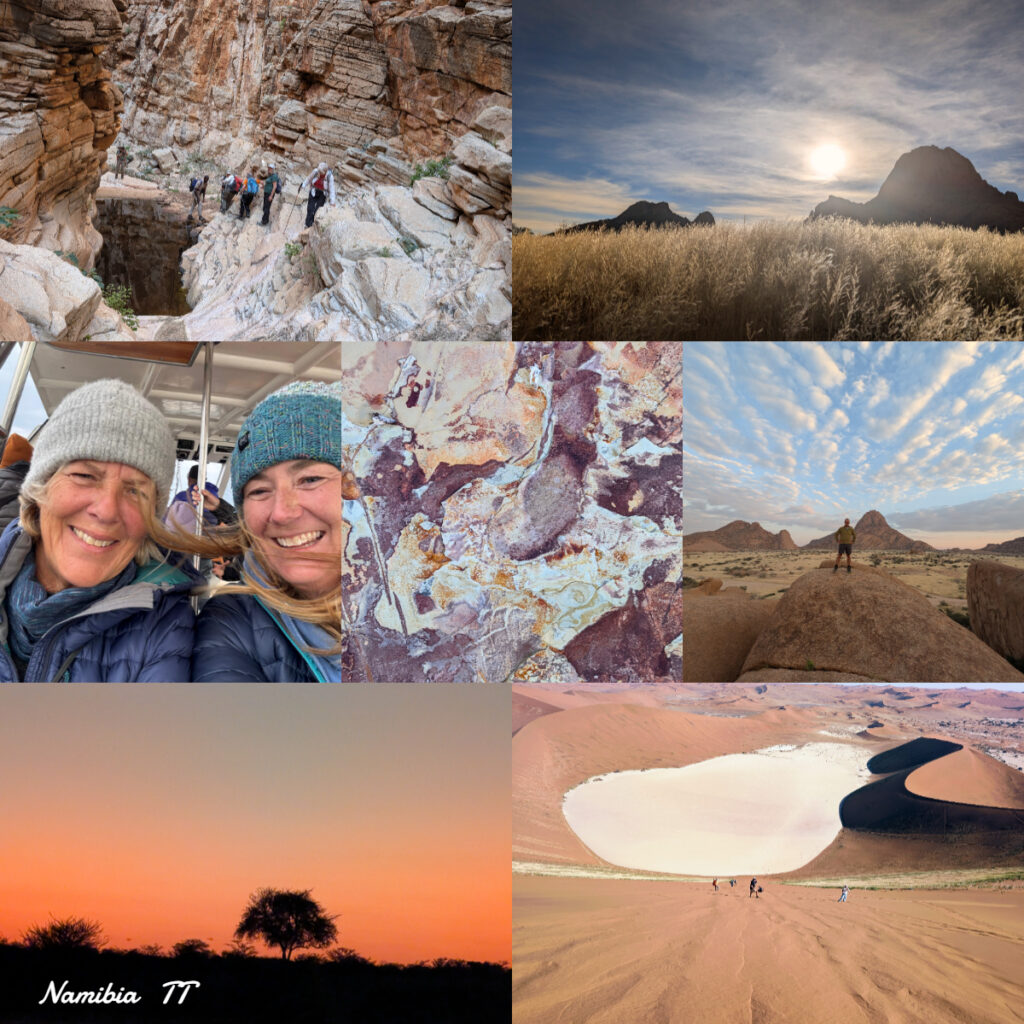
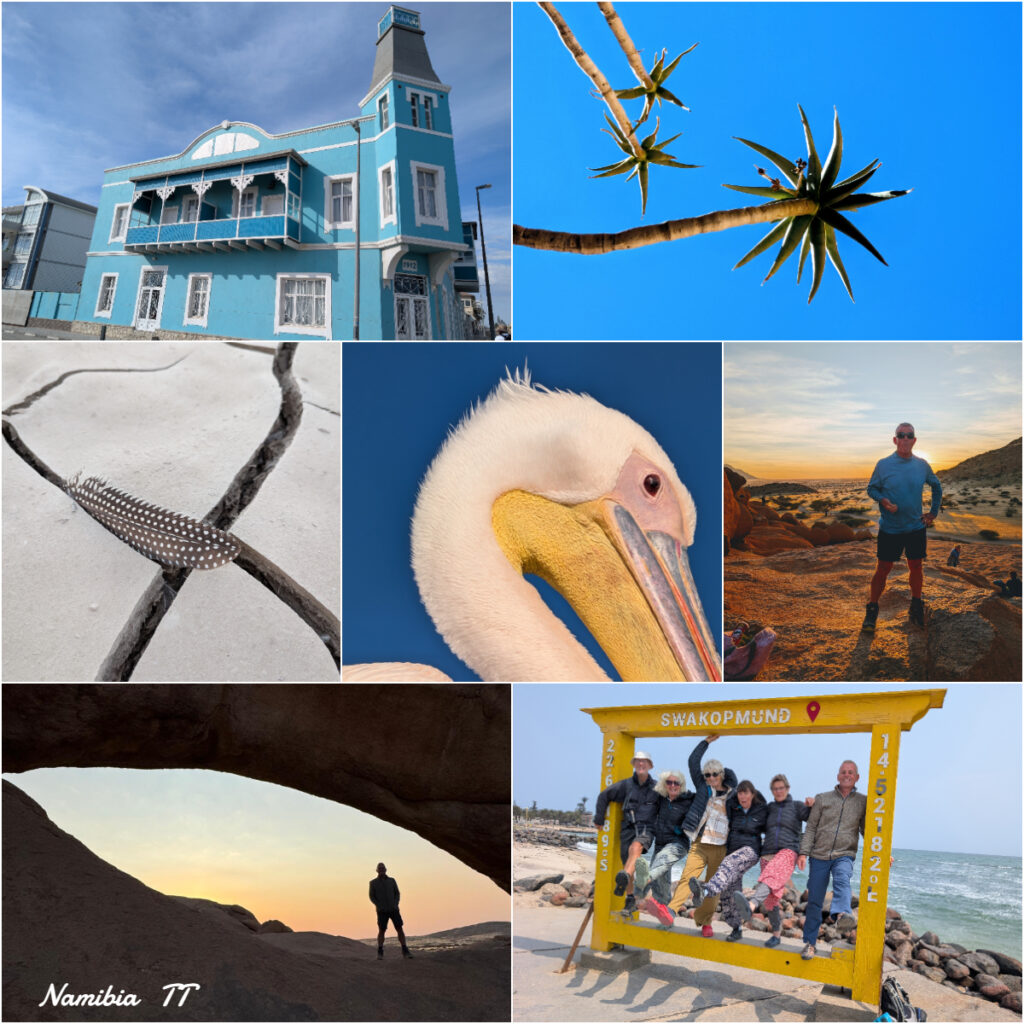
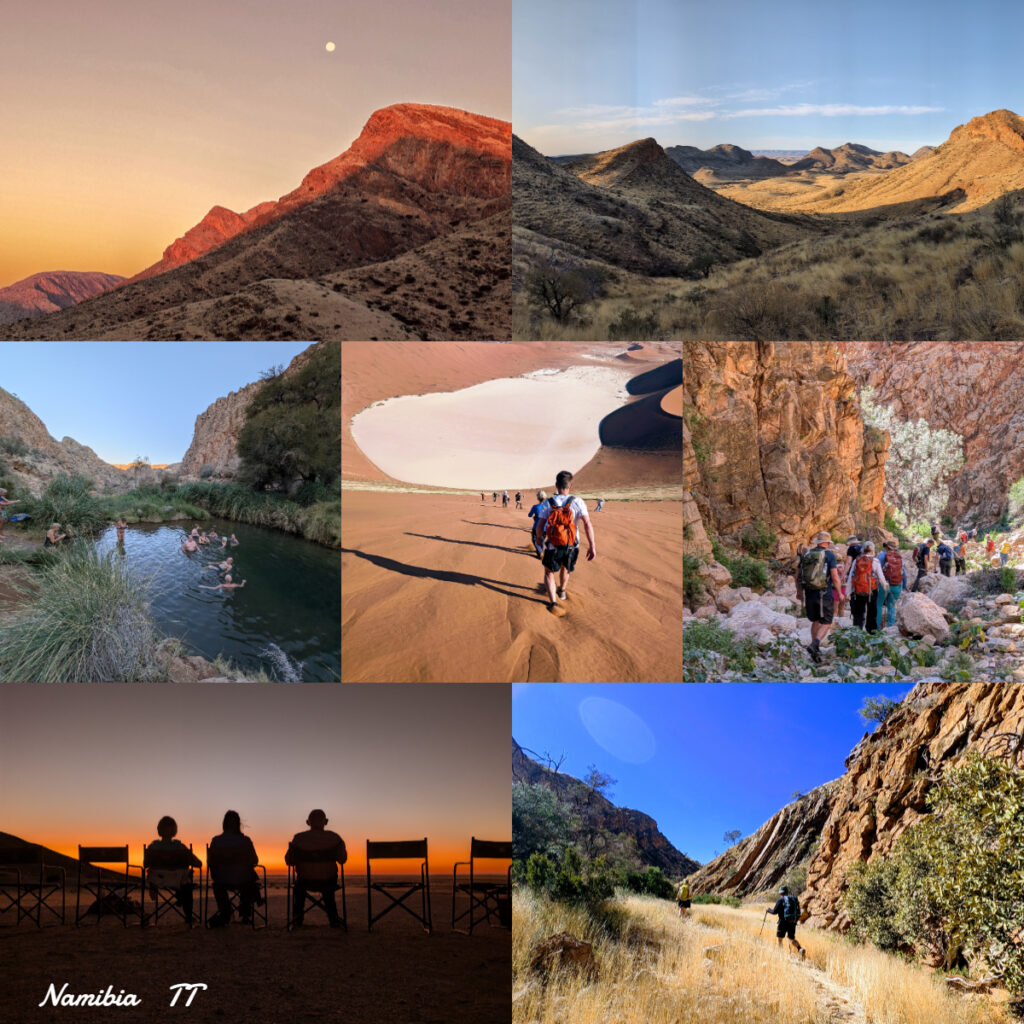
The Namib-Naukluft National Park; Africa’s biggest wildlife reserve and the fourth largest in the world, stretching almost 50000 square kilometres across the red-orange sands of the Namib Desert, over the Naukluft Mountains to the east. We hiked the stunning Olive Trail in the Naukluft Mountains. Sossusvlei is where you will find the iconic red sand dunes of the Namib. The clear blue skies contrast with the giant red dunes; it is where we climbed ‘big daddy’ the most iconic of Namibia’s dunes and visited Dead Vlei, the ancient clay pan which was once an oasis. Swakopmund is the gateway of the Skeleton Coast, often described as being more German than Germany. It is where we enjoyed a refreshing dip in the cool and wild Atlantic Ocean and went on a boat trip with sightings of whales, pelicans and hundreds of seals. We trekked through the Khan riverbed and camped and hiked at Spitzkoppe. Here we found groups of bald granite peaks forming one of Namibia’s most recognizable and dramatic landmarks. Windhoek, Namibia’s capital, is where we started and finished our remarkable journey.
Itinerary
A 12-day itinerary, a mix of driving, hiking and sightseeing. So much to see that it would not make sense to stick to one area only. We drove around in a comfortable bush-capable truck/bus equipped with everything we needed for our tour. 4 hotel nights, all the other nights we camped at amazing locations.
Trail history
May 2025, 2 German groups in cooperation with Wuestenwanderer.de
September 2025, a British Tt group
Future trails
Nothing planned at the moment but it will only be a matter of time before we will be back…
Namibia – The Grand Trail –
Namibia is one of Africa’s most dramatic and visually striking countries, defined by the world’s oldest desert, towering red dunes, wildlife-rich savannas, and a haunting Atlantic coastline. It is one of the largest yet least densely populated countries on Earth.
Namibia’s location is in Southwestern Africa, bordering Angola, Zambia, Botswana, South Africa, and the Atlantic Ocean. Namibia’s history moves from ancient hunter‑gatherer cultures to German colonization, South African rule, a long independence struggle and finally independence in 1990. Since independence, Namibia has been politically stable, with steady economic growth driven by mining, tourism, and conservation. Its landscapes feel almost otherworldly—perfect for somebody who loves wide horizons, silence, and raw natural beauty. The Namib desert is considered the oldest desert in the world, with arid conditions lasting 55–80 million years. It is home to the Namib Sand Sea, with dunes over 300 meters high and features the Skeleton Coast, known for shipwrecks, fog, and dramatic emptiness. Despite its aridity, Namibia is rich in wildlife.
Highlights
The Namib-Naukluft National Park; Africa’s biggest wildlife reserve and the fourth largest in the world, stretching almost 50000 square kilometres across the red-orange sands of the Namib Desert, over the Naukluft Mountains to the east. We hiked the stunning Olive Trail in the Naukluft Mountains. Sossusvlei is where you will find the iconic red sand dunes of the Namib. The clear blue skies contrast with the giant red dunes; it is where we climbed ‘big daddy’ the most iconic of Namibia’s dunes and visited Dead Vlei, the ancient clay pan which was once an oasis. Swakopmund is the gateway of the Skeleton Coast, often described as being more German than Germany. It is where we enjoyed a refreshing dip in the cool and wild Atlantic Ocean and went on a boat trip with sightings of whales, pelicans and hundreds of seals. We trekked through the Khan riverbed and camped and hiked at Spitzkoppe. Here we found groups of bald granite peaks forming one of Namibia’s most recognizable and dramatic landmarks. Windhoek, Namibia’s capital, is where we started and finished our remarkable journey.
Itinerary
A 12-day itinerary, a mix of driving, hiking and sightseeing. So much to see that it would not make sense to stick to one area only. We drove around in a comfortable bush-capable truck/bus equipped with everything we needed for our tour. 4 hotel nights, all the other nights we camped at amazing locations.
Trail history
May 2025, 2 German groups in cooperation with Wuestenwanderer.de
September 2025, a British Tt group
Future trails
Nothing planned at the moment but it will only be a matter of time before we will be back…
Namibia
The Grand Trail
Every trail becomes a story worth telling…