Oman – The Oman Trail –
Oman stands out as one of the most stable, scenic, and culturally rich countries on the Arabian Peninsula, known for its dramatic mountains, pristine coastline, and deep-rooted traditions. Its capital, Muscat, blends modern development with historic architecture, and the country is widely recognized for its strategic location, long maritime history, and distinctive identity within the Gulf region. Oman is one of the oldest independent states in the Arab world, situated on the southeastern coast of the Arabian Peninsula, bordering Saudi Arabia, UAE, and Yemen. You still find an authentic Arabian culture with less commercial development than neighbouring Gulf states. It is historically renowned for frankincense trade and maritime power and for Portuguese control of Muscat from 1507–1650. Oman’s geography is defined by dramatic mountain ranges, vast deserts, and long coastlines—creating one of the most diverse landscapes on the Arabian Peninsula. Its terrain shapes everything from climate to culture, making it a standout destination for travel, trekking, and coastal exploration.
Highlights
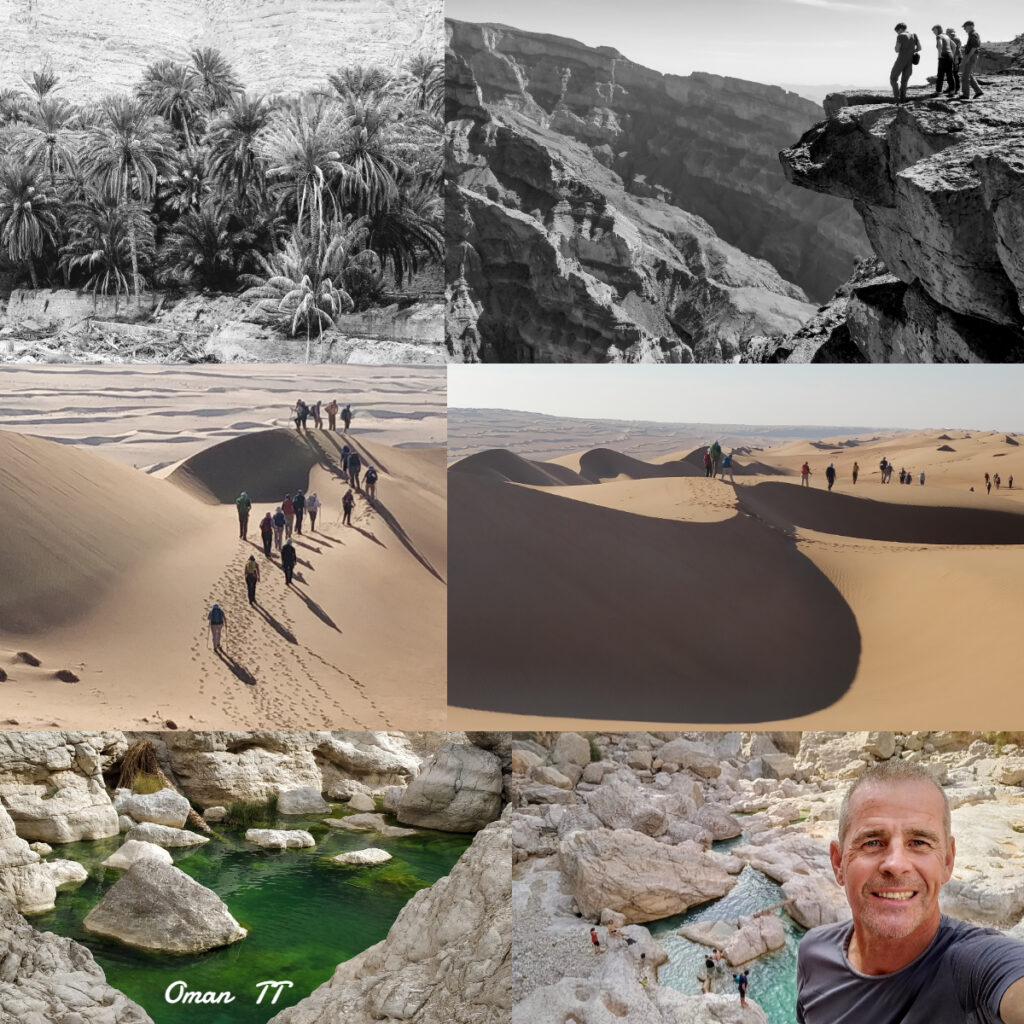
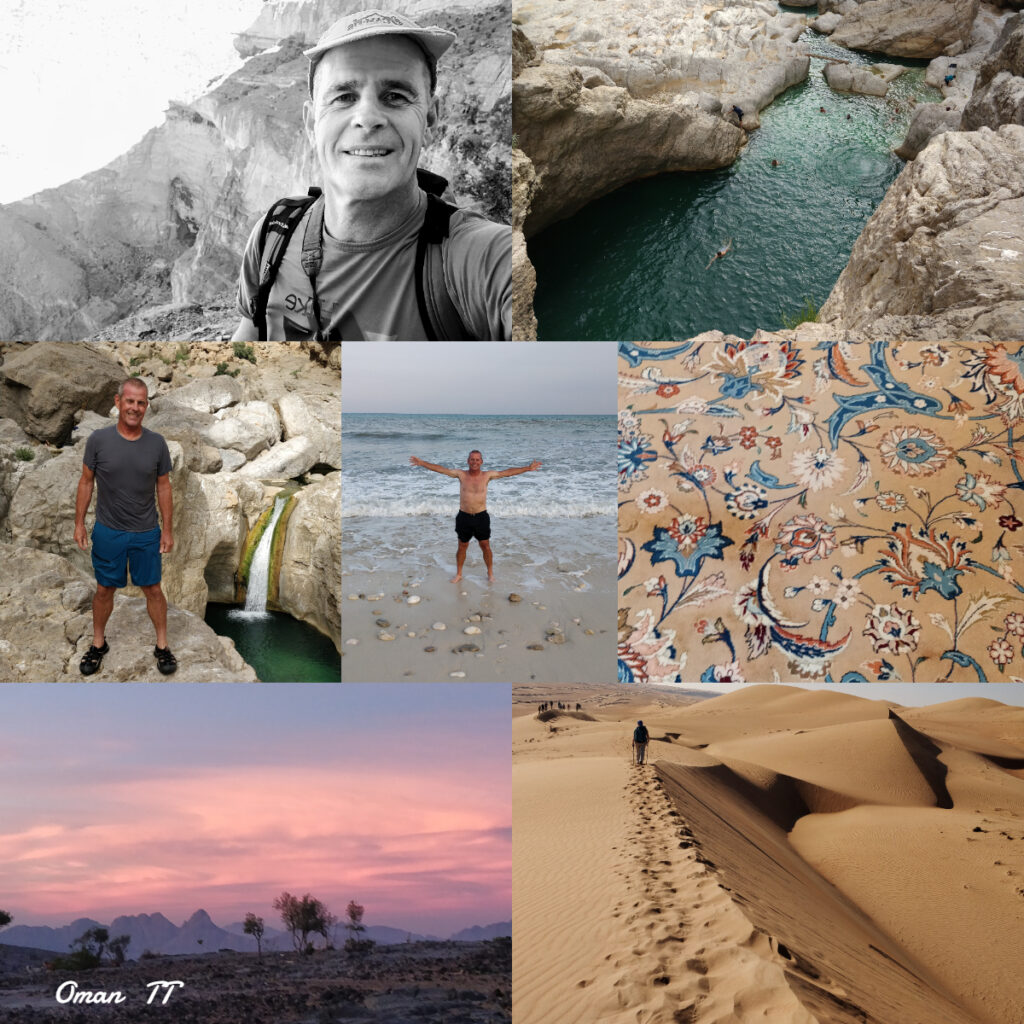
Jebel Shams, Oman’s highest peak at 3,008 m, towering above an impressive granite landscape with deep wadis cutting through the range and creating dramatic canyons. It is the Grand Canyon of Oman. Wahiba Sands, also known as Sharqiyah Sands, is one of Oman’s most iconic desert regions, famous for its long north–south dunes, Bedouin culture. Wadi Tiwi is one of Oman’s most dramatic and rewarding wadis, steep canyon walls, emerald pools, lush plantations, and traditional mountain villages stretching for about 36 km from the Hajar Mountains to the Gulf of Oman. Wadi Shab, a spectacular canyon that ends with turquoise pools, swimming sections, and a hidden waterfall inside a cave. The Selma Plateau is one of Oman’s most remote, dramatic highland regions, an elevated limestone tableland above 2,000 m, famous for its beehive tombs, vast open ridges, and access to some of the country’s most impressive caves and wadis. It’s wild, empty.
Itinerary
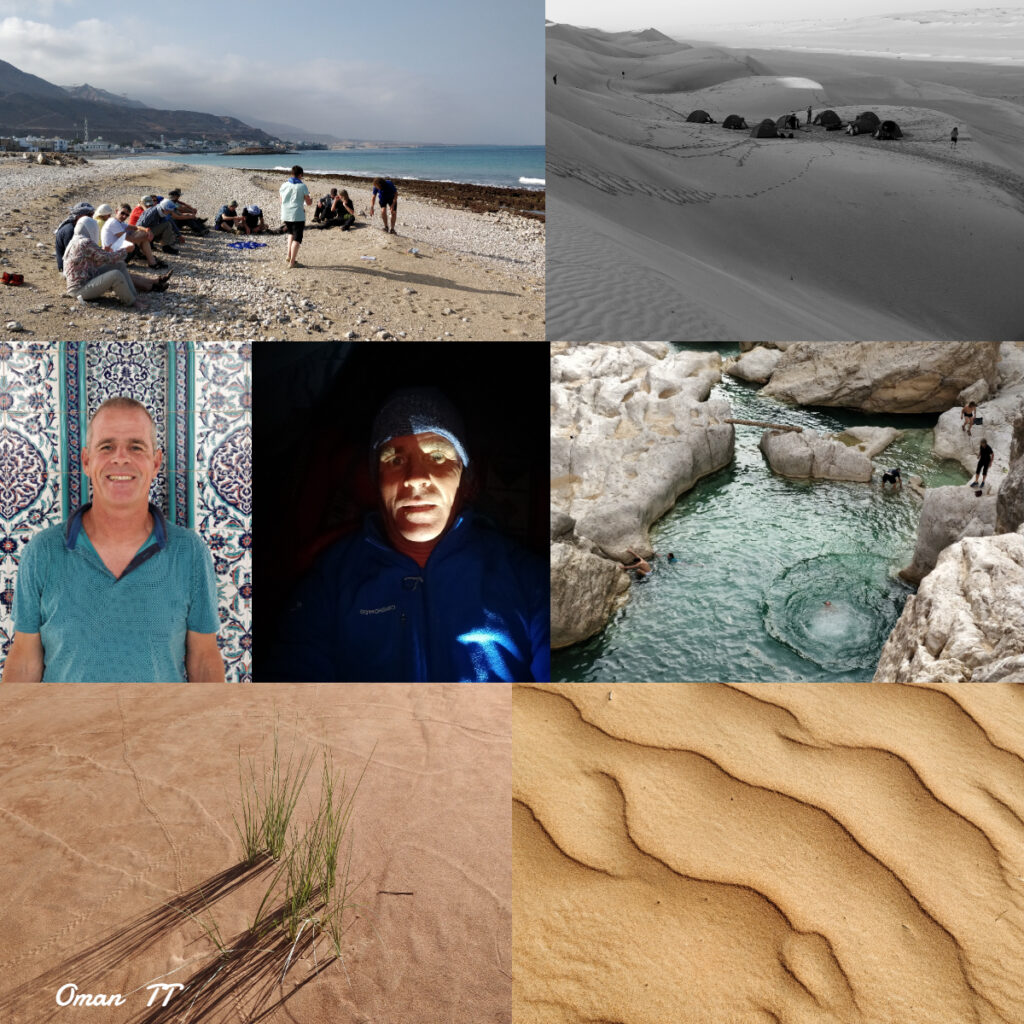
11 days in a drive and trek tour. We drove to different areas where we trekked, camped and moved further again. Oman has different areas on display, so it did make sense to visit the most beautiful ones, even if it involved a bit of driving.
Trail history
December 2019, a German group in cooperation with Wuestenwanderer.
Future trails
We are looking into a new trail at the very end of 2027 or early 2028…
Oman – The Oman Trail –
Oman stands out as one of the most stable, scenic, and culturally rich countries on the Arabian Peninsula, known for its dramatic mountains, pristine coastline, and deep-rooted traditions. Its capital, Muscat, blends modern development with historic architecture, and the country is widely recognized for its strategic location, long maritime history, and distinctive identity within the Gulf region. Oman is one of the oldest independent states in the Arab world, situated on the southeastern coast of the Arabian Peninsula, bordering Saudi Arabia, UAE, and Yemen. You still find an authentic Arabian culture with less commercial development than neighbouring Gulf states. It is historically renowned for frankincense trade and maritime power and for Portuguese control of Muscat from 1507–1650. Oman’s geography is defined by dramatic mountain ranges, vast deserts, and long coastlines—creating one of the most diverse landscapes on the Arabian Peninsula. Its terrain shapes everything from climate to culture, making it a standout destination for travel, trekking, and coastal exploration.
Highlights
Jebel Shams, Oman’s highest peak at 3,008 m, towering above an impressive granite landscape with deep wadis cutting through the range and creating dramatic canyons. It is the Grand Canyon of Oman. Wahiba Sands, also known as Sharqiyah Sands, is one of Oman’s most iconic desert regions, famous for its long north–south dunes, Bedouin culture. Wadi Tiwi is one of Oman’s most dramatic and rewarding wadis, steep canyon walls, emerald pools, lush plantations, and traditional mountain villages stretching for about 36 km from the Hajar Mountains to the Gulf of Oman. Wadi Shab, a spectacular canyon that ends with turquoise pools, swimming sections, and a hidden waterfall inside a cave. The Selma Plateau is one of Oman’s most remote, dramatic highland regions, an elevated limestone tableland above 2,000 m, famous for its beehive tombs, vast open ridges, and access to some of the country’s most impressive caves and wadis. It’s wild, empty.
Itinerary
11 days in a drive and trek tour. We drove to different areas where we trekked, camped and moved further again. Oman has different areas on display, so it did make sense to visit the most beautiful ones, even if it involved a bit of driving.
Trail history
December 2019, a German group in cooperation with Wuestenwanderer.
Future trails
We are looking into a new trail at the very end of 2027 or early 2028…