Turkey – The Lycian Way Trail –
Turkey is a transcontinental nation bridging Europe and Asia, with a deep historical legacy and vibrant modern culture. It sits at the crossroads of the Balkans, Caucasus, Middle East, and Eastern Mediterranean.
Lycia was an ancient region located along the Mediterranean coast of modern-day Muğla and Antalya provinces. The Lycians were known for their fiercely independent spirit, naval prowess, and unique culture. The Lycian Way was conceived by British expatriate Kate Clow and officially opened in 1999. It follows ancient trade and travel routes used by the Lycians and offers hikers a mix of archaeological wonders, coastal views, and mountain landscapes.
Turkey is bordered by 8 countries and 3 major seas. Turkey’s history spans over 10,000 years, making it one of the world’s richest archaeological landscapes. Hittites, Greeks, Romans, Byzantines, Seljuks, and Ottomans all shaped Anatolia. The Ottoman Empire dissolved after WWI and the Republic of Turkey was founded in 1923. Lycia appears in Greek mythology, Hittite and Egyptian texts, and was involved in major historical events like the Trojan War and Persian Wars. The Lycians developed their own language and script, practiced matrilineal descent (according to Herodotus), and formed the Lycian League, one of the earliest known democratic federations. It takes approximately 29 days to hike the entire Lycian Way, which has a total length of more than 500 km (roughly from Fethiye to Antalya).
Highlights
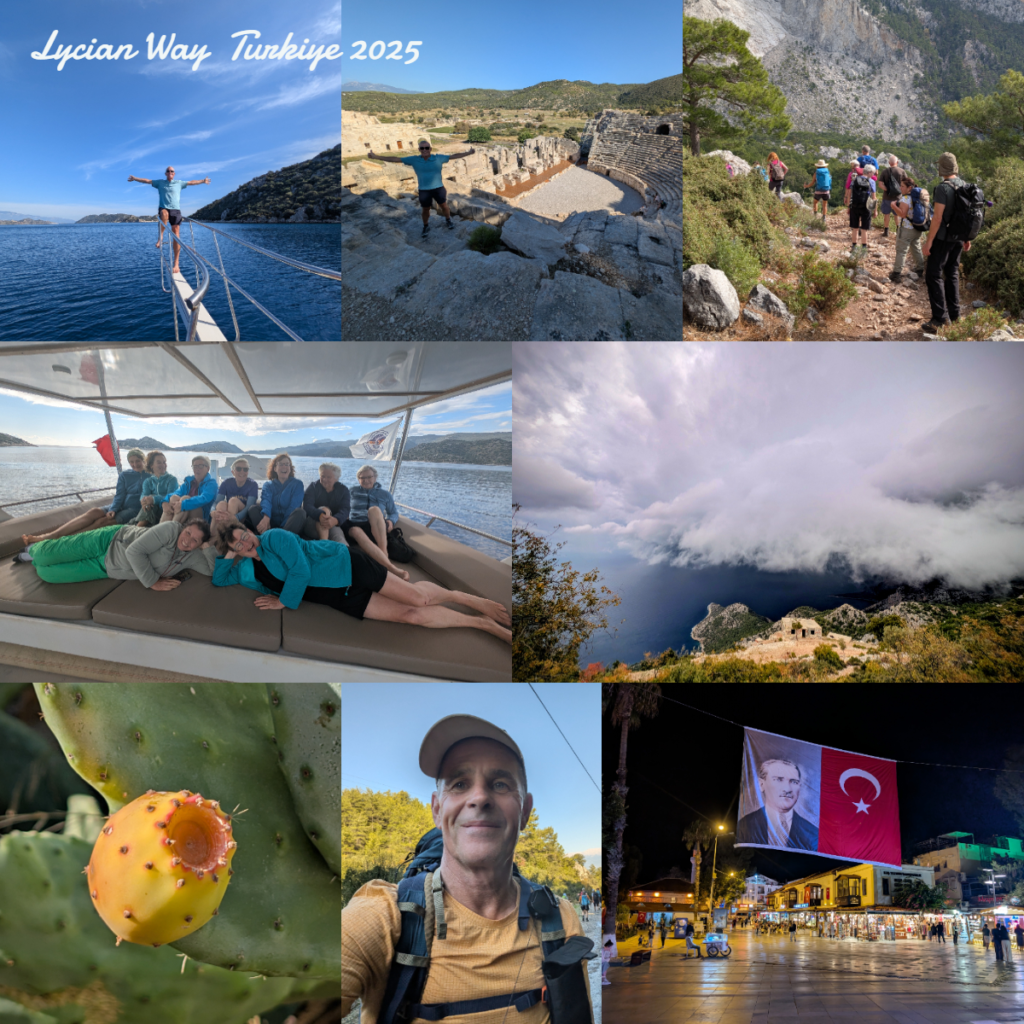
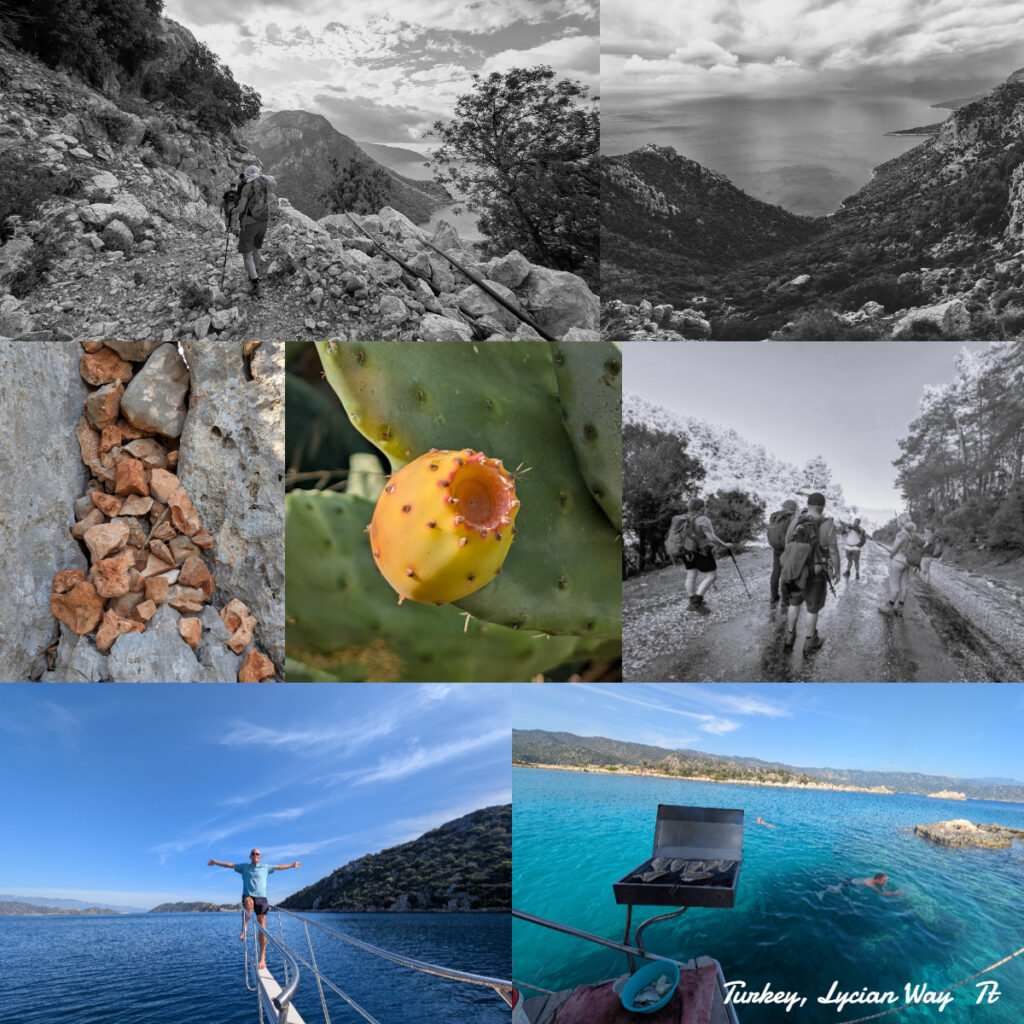
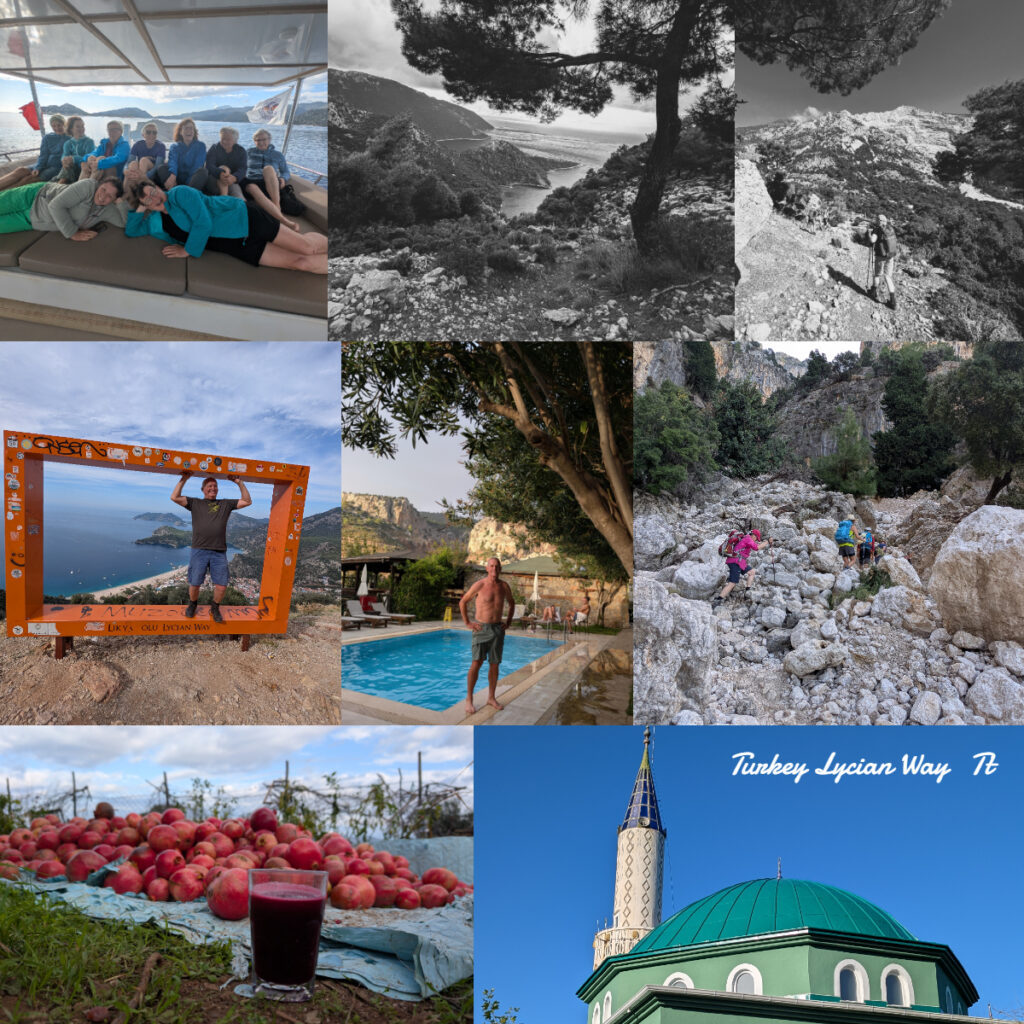
The trail often consists of Roman roads, ancient footpaths, and mule tracks. There are both ancient ruins and typical Mediterranean landscapes with mountains, villages, pine forests, beaches, etc. Sidyma is an ancient Lycian city and one of the most atmospheric because the Ottoman village of Dodurga sits right inside the ruins. Patara was once a major Lycian port, a Roman provincial centre and the birthplace of St. Nicholas. Just beyond the ruins lies an 18 km protected beach—one of the Mediterranean’s longest—famous for Caretta turtle nesting. We enjoyed a dive and a BBQ on our boat trip and saw parts of the sunken city of Kekova. We stayed in Kas on the last 2 nights, a town that has retained its charm and remains one of the most authentic towns of the Turquoise Coast.
Itinerary
8 days in total. We trekked for 6 days (4 full days of walking and 2 half-days) and combined it with archaeology, further sightseeing, relaxing on the beach and a boat trip.
Trail history
October/November 2025, 2 German group in cooperation with Wuestenwanderer.de
Future trails
A Lycian Trail will take place in November 2026. More to follow…
Turkey – The Lycian Way Trail –
Turkey is a transcontinental nation bridging Europe and Asia, with a deep historical legacy and vibrant modern culture. It sits at the crossroads of the Balkans, Caucasus, Middle East, and Eastern Mediterranean.
Lycia was an ancient region located along the Mediterranean coast of modern-day Muğla and Antalya provinces. The Lycians were known for their fiercely independent spirit, naval prowess, and unique culture. The Lycian Way was conceived by British expatriate Kate Clow and officially opened in 1999. It follows ancient trade and travel routes used by the Lycians and offers hikers a mix of archaeological wonders, coastal views, and mountain landscapes.
Turkey is bordered by 8 countries and 3 major seas. Turkey’s history spans over 10,000 years, making it one of the world’s richest archaeological landscapes. Hittites, Greeks, Romans, Byzantines, Seljuks, and Ottomans all shaped Anatolia. The Ottoman Empire dissolved after WWI and the Republic of Turkey was founded in 1923. Lycia appears in Greek mythology, Hittite and Egyptian texts, and was involved in major historical events like the Trojan War and Persian Wars. The Lycians developed their own language and script, practiced matrilineal descent (according to Herodotus), and formed the Lycian League, one of the earliest known democratic federations. It takes approximately 29 days to hike the entire Lycian Way, which has a total length of more than 500 km (roughly from Fethiye to Antalya).
Highlights
The trail often consists of Roman roads, ancient footpaths, and mule tracks. There are both ancient ruins and typical Mediterranean landscapes with mountains, villages, pine forests, beaches, etc. Sidyma is an ancient Lycian city and one of the most atmospheric because the Ottoman village of Dodurga sits right inside the ruins. Patara was once a major Lycian port, a Roman provincial centre and the birthplace of St. Nicholas. Just beyond the ruins lies an 18 km protected beach—one of the Mediterranean’s longest—famous for Caretta turtle nesting. We enjoyed a dive and a BBQ on our boat trip and saw parts of the sunken city of Kekova. We stayed in Kas on the last 2 nights, a town that has retained its charm and remains one of the most authentic towns of the Turquoise Coast.
Itinerary
8 days in total. We trekked for 6 days (4 full days of walking and 2 half-days) and combined it with archaeology, further sightseeing, relaxing on the beach and a boat trip.
Trail history
October/November 2025, 2 German group in cooperation with Wuestenwanderer.de
Future trails
A Lycian Trail will take place in November 2026. More to follow…