Egypt – The Western Desert Trail –
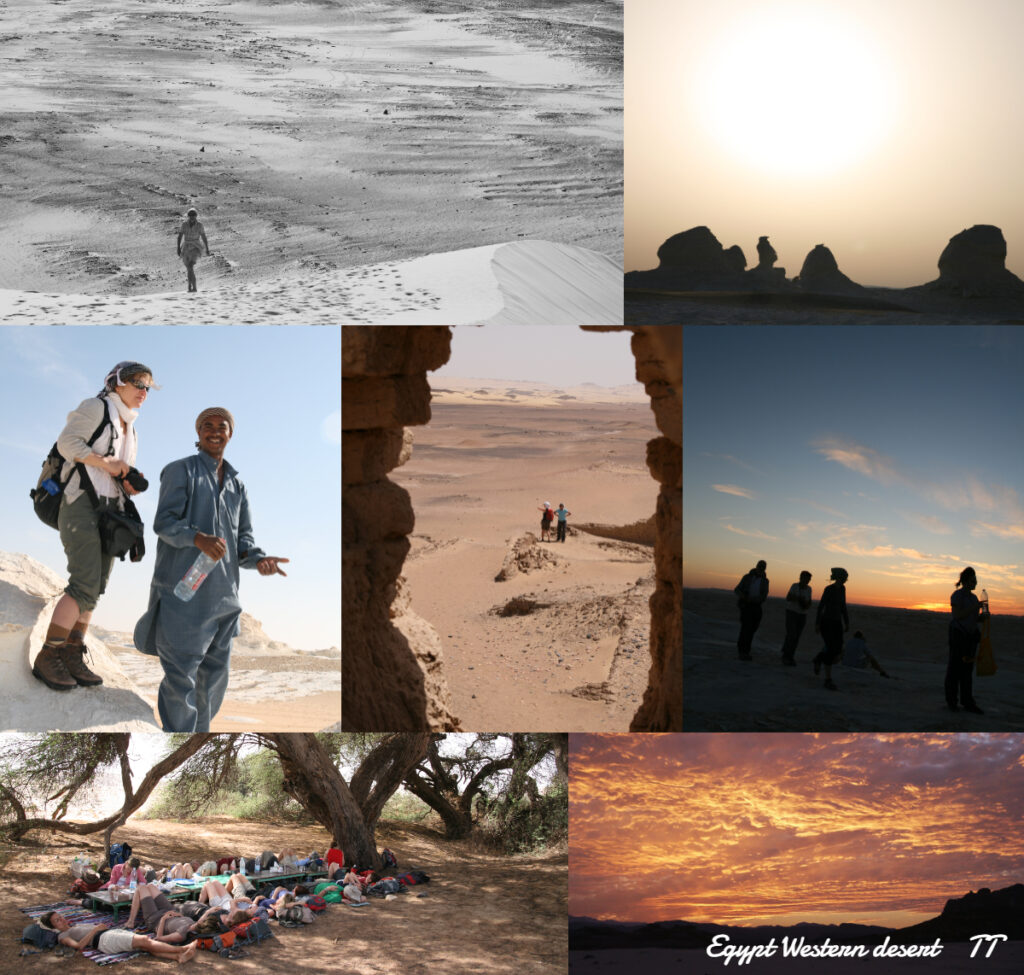
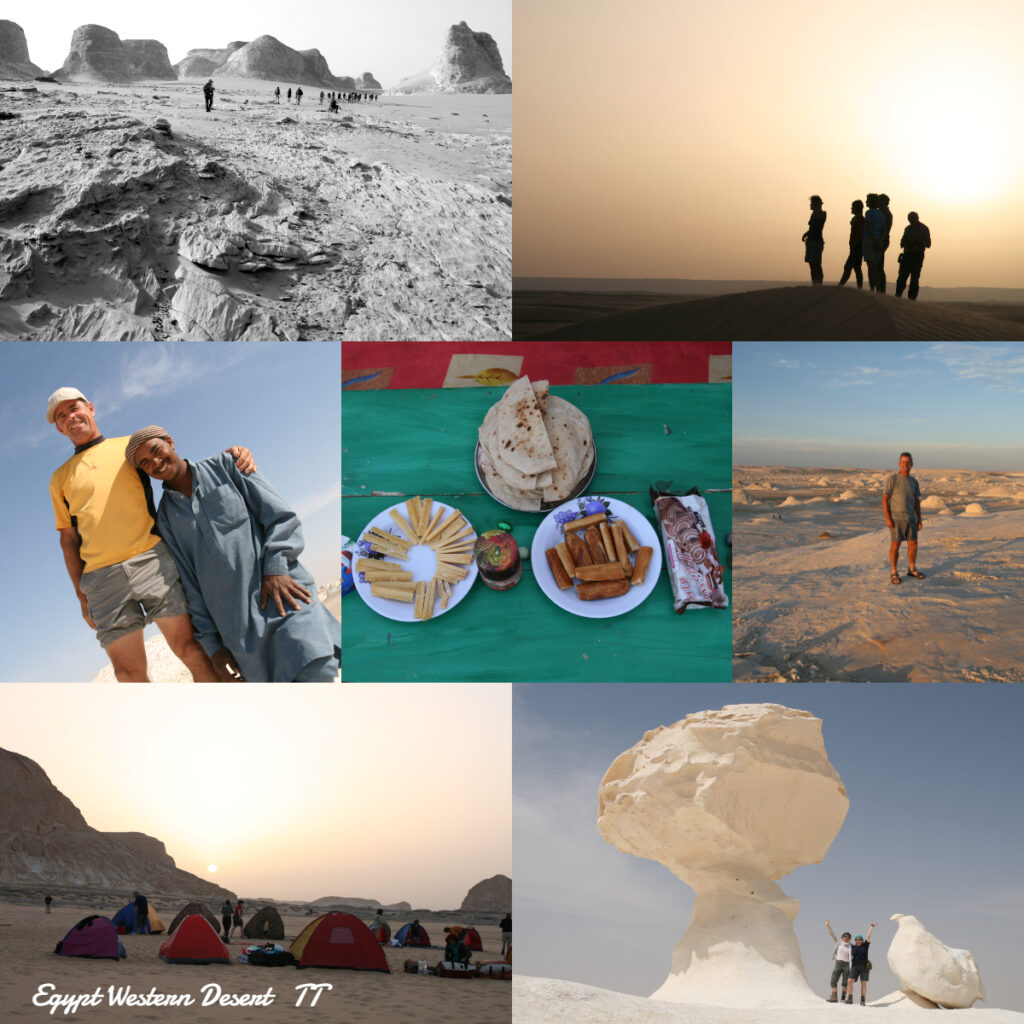
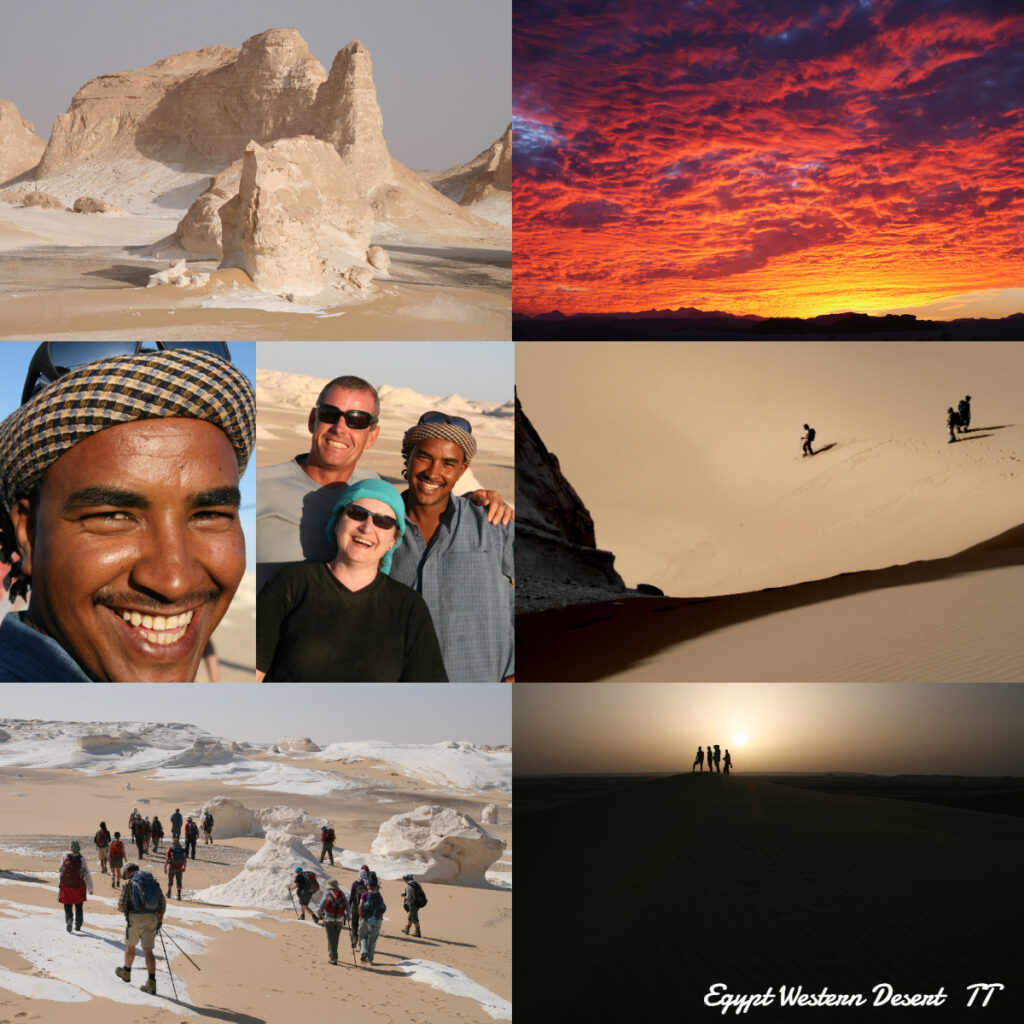
The Western Desert of Egypt forms nearly two‑thirds of the country, it extends west of the Nile to Libya, and from the Mediterranean down to Sudan. It is Part of the greater Sahara, yet with its own distinct geological and cultural identity. Within the western desert, we find different eco systems and niche areas. One of those areas is the White Desert, one of the country’s most surreal natural wonders, famous for its ghost‑white chalk formations shaped by millennia of wind and sand erosion. Its landscapes, towering mushrooms, monoliths, and sculpted ridges are unique.
The Western Desert offers vast plateaus, dramatic sand seas, and a chain of ancient oases. It’s a region defined by silence, surreal landscapes, and deep historical layers, from prehistoric cave art to WWII battlefields. The White Desert is situated in the Western Desert, about 500–570 km southwest of Cairo, and is part of the Farafra Depression, one of Egypt’s largest desert depressions. The desert is covered in white chalk, limestone, and quartz crystal deposits. Adjacent to the White Desert lies the Black Desert, formed from volcanic rock. The contrast between black basalt hills and white chalk formations creates one of Egypt’s most striking natural juxtapositions. Further on, a chain of oases arcs from northwest to south, each with its own character.
Caravan routes once crossed the desert, linking Egypt with Libya and Chad. Siwa’s Oracle of Amun was visited by Alexander the Great in 331 and The Western Desert was a major theatre of the Western Desert Campaign, where British and German forces fought across the plateaus and oases.
Highlights.
Experiencing the Western Desert, the vast and almost from tourist deprived area east of the Nile. Driving from Cairo to Luxor, passing some sporadic villages, entering some local oases and getting a true ‘feel’ of the Sahara. This in stark contrast with the overcrowded west bank of the Nile. Of course there is trekking, in the White desert and the huge dunes further south. Priceless trekking and camping under a starry sky combined with exploring Cairo (starting point) and Luxor (the end of our tour).
Trail history
April 2011, a German group in cooperation with Wuestenwanderer.de
Itinerary
11 days. A combination of driving, trekking (Western desert, White desert) and sightseeing (Cairo, Luxor). Hotels and camping.
Future Trails
I am not looking into future dates at this moment because of local buraucratic restrictions imposed on visitors. Once this has changed we will be back in the game…
Egypt – The Western Desert Trail –
The Western Desert of Egypt forms nearly two‑thirds of the country, it extends west of the Nile to Libya, and from the Mediterranean down to Sudan. It is Part of the greater Sahara, yet with its own distinct geological and cultural identity. Within the western desert, we find different eco systems and niche areas. One of those areas is the White Desert, one of the country’s most surreal natural wonders, famous for its ghost‑white chalk formations shaped by millennia of wind and sand erosion. Its landscapes, towering mushrooms, monoliths, and sculpted ridges are unique.
The Western Desert offers vast plateaus, dramatic sand seas, and a chain of ancient oases. It’s a region defined by silence, surreal landscapes, and deep historical layers, from prehistoric cave art to WWII battlefields. The White Desert is situated in the Western Desert, about 500–570 km southwest of Cairo, and is part of the Farafra Depression, one of Egypt’s largest desert depressions. The desert is covered in white chalk, limestone, and quartz crystal deposits. Adjacent to the White Desert lies the Black Desert, formed from volcanic rock. The contrast between black basalt hills and white chalk formations creates one of Egypt’s most striking natural juxtapositions. Further on, a chain of oases arcs from northwest to south, each with its own character.
Caravan routes once crossed the desert, linking Egypt with Libya and Chad. Siwa’s Oracle of Amun was visited by Alexander the Great in 331 and The Western Desert was a major theatre of the Western Desert Campaign, where British and German forces fought across the plateaus and oases.
Highlights.
Experiencing the Western Desert, the vast and almost from tourist deprived area east of the Nile. Driving from Cairo to Luxor, passing some sporadic villages, entering some local oases and getting a true ‘feel’ of the Sahara. This in stark contrast with the overcrowded west bank of the Nile. Of course there is trekking, in the White desert and the huge dunes further south. Priceless trekking and camping under a starry sky combined with exploring Cairo (starting point) and Luxor (the end of our tour).
Trail history
April 2011, a German group in cooperation with Wuestenwanderer.de
Itinerary
11 days. A combination of driving, trekking (Western desert, White desert) and sightseeing (Cairo, Luxor). Hotels and camping.
Future Trails
I am not looking into future dates at this moment because of local buraucratic restrictions imposed on visitors. Once this has changed we will be back in the game…