Mongolia – The 8 Lakes Trail –
Mongolia is a landlocked country in East Asia, bordered by Russia to the north and China to the south, known for its sweeping steppes, nomadic heritage, and the legacy of Genghis Khan. The country’s vast wilderness, nomadic culture, and low population density make it ideal for trekking. It offers some of the most remote, dramatic, and culturally rich hiking experiences on vast grasslands, in the desert or on high altitude expeditions.
Mongolia is about 6 times bigger than the UK, with a population of only 3.5 million, half of which lives in the capital, Ulaanbaatar. Much of its area is covered by grassy steppe, with mountains to the north and west and the Gobi Desert to the south. The annual average temperature in Ulaanbaatar is −1.3 °C whilst the average winter temperature in UB is -23°C, making it the world’s coldest capital city. The most famous Mongolian ever was Genghis Khan. GK, born in Temujin around May 31, 1162, established the Mongol Empire in 1206, which became the largest entirely connected (contiguous) empire in history. In the 16th century, Tibetan Buddhism spread to Mongolia and by the early 20th century, almost one-third of the adult male population were Buddhist monks. Under Stalin, Mongolia experienced one of its darkest chapters. Most of the top-ranking monks were executed and almost all of the 700 functioning temples were destroyed. Mongolia conducted its own peaceful democratic revolution in early 1990. This led to a multi-party system, a new constitution of 1992, and transition to a market economy.
Highlights
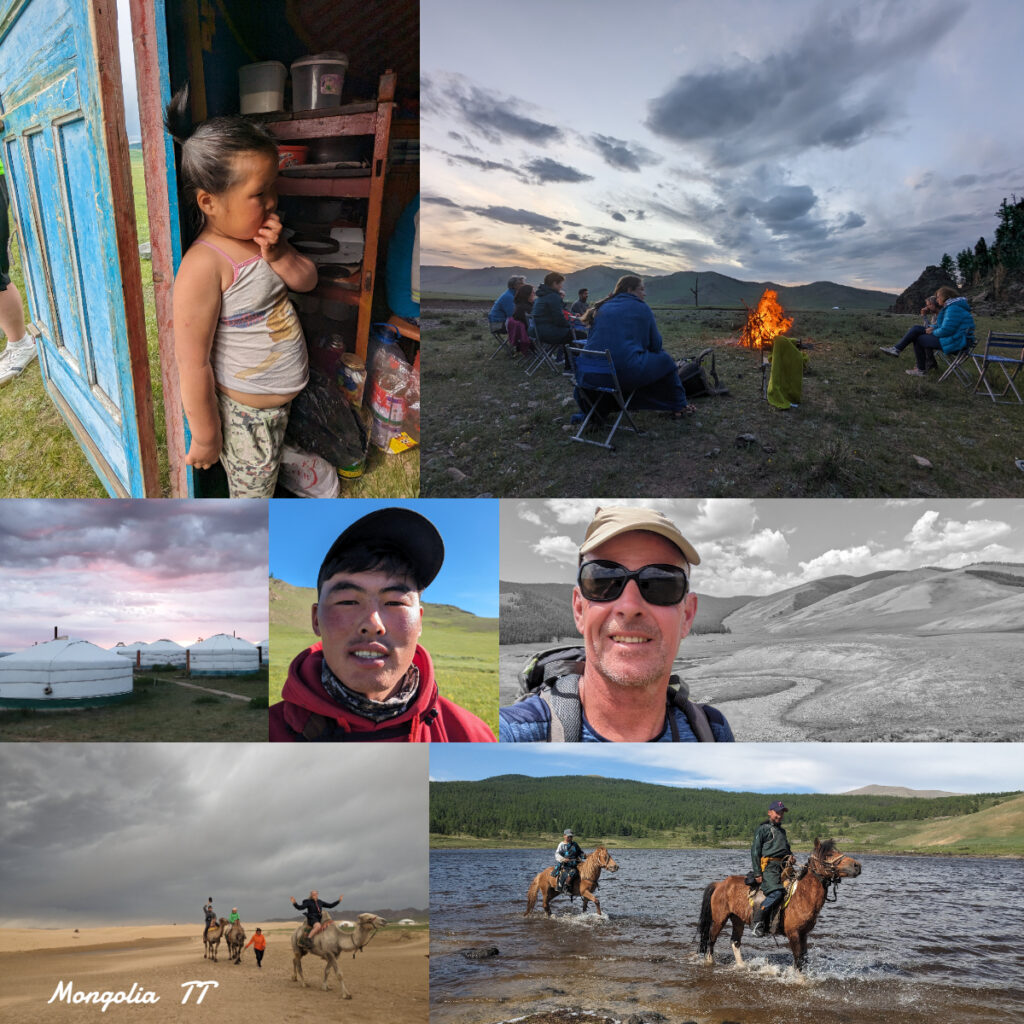
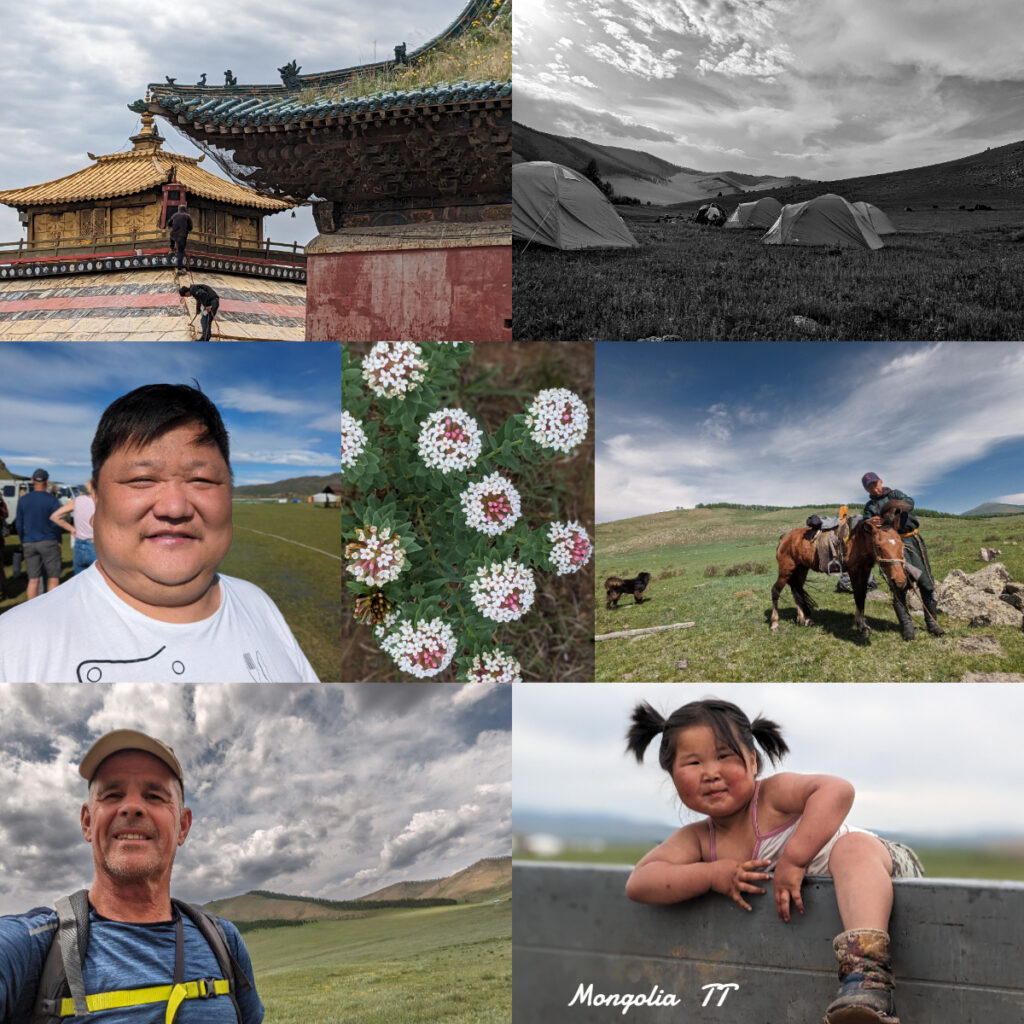
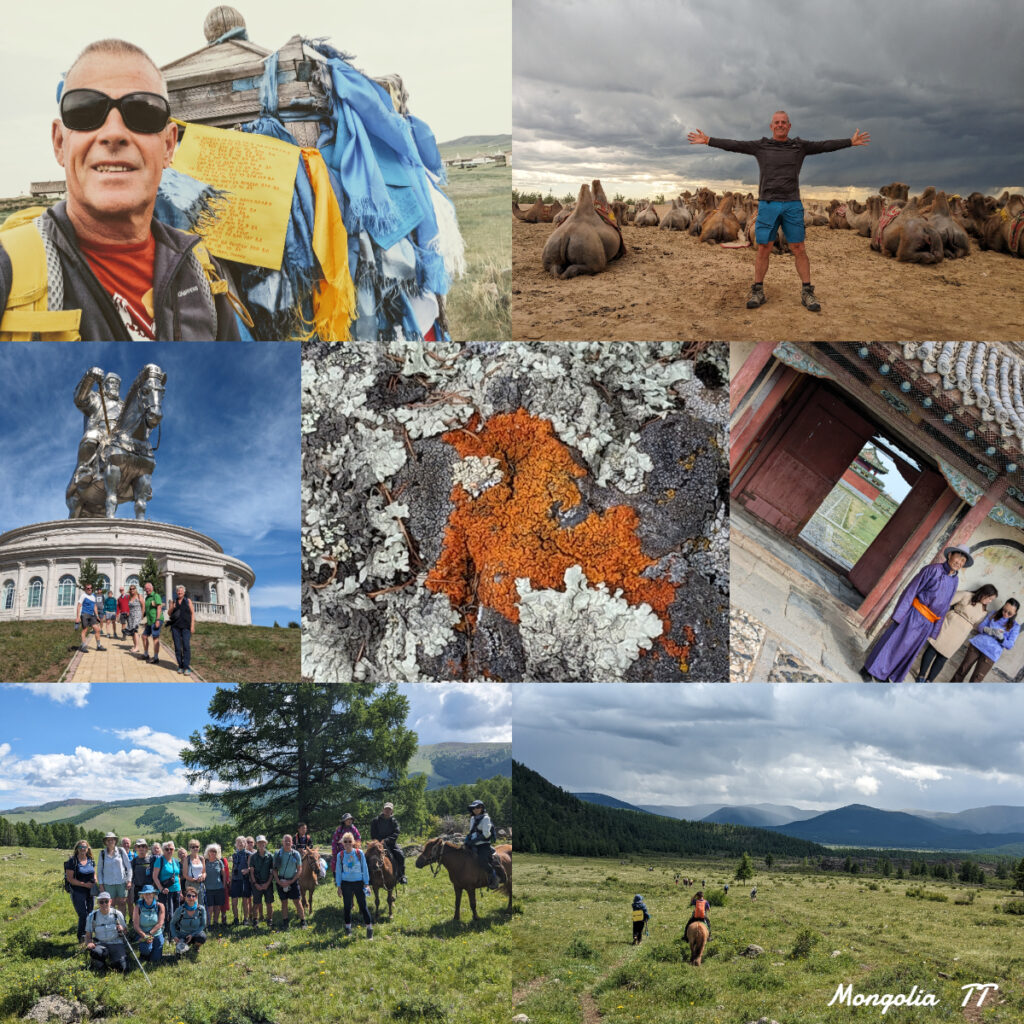
Miles and miles of rolling green meadows with free roaming horses, flocks of sheep, goats, and traditional Ger tents. Not a fence to be seen! Crossing the steppe, we drove to Kharkhorin, the ancient capital of Mongolia and the adjacent Erdene Zuu Monastery. Further driving through the endless grasslands, we also visited the hilltop monastery of Tovkhon Khiid, fantastic views up there. Then, it was time to trek. At Naiman Mur, the eight lakes trek was just about that, trekking from lake to lake. This area was shaped by volcanic eruptions, is located at around 2,200 metres above sea level with surrounding areas made up of high mountains, sub alpine mountain meadows and coniferous forests of Siberian Pine and Siberian Larch. Miles and miles of wildflower meadows. The Elsen Tasarkhai Dunes (dubbed the Little Gobi) are part of the rather unique eco system which includes a combination of hills with rocky outcrops, wetlands, rivers, forest and of course the dunes. We trekked through the dunes and visited the lower and upper Uvgun monastery, built in 17th century by Zanabazar. A wonderful Mongolian experience.
Itinerary
We toured for 12 days and embarked on a drive/trek experience. We focussed on the grasslands with a drive to the eight lakes district, where we hiked and camped for 5 days. We did almost everything the Mongolian way, sleeping in (comfortable) traditional Gers and camping in tents, with only 2 nights in a hotel (Ulaanbaatar at the beginning and end).
Trail history
June 2023, a German group in cooperation with Wuestenwanderer.de
June 2024, a British Tt group
Future trails
We are hoping to visit Mongolia again in the future.
Mongolia – The 8 Lakes Trail –
Mongolia is a landlocked country in East Asia, bordered by Russia to the north and China to the south, known for its sweeping steppes, nomadic heritage, and the legacy of Genghis Khan. The country’s vast wilderness, nomadic culture, and low population density make it ideal for trekking. It offers some of the most remote, dramatic, and culturally rich hiking experiences on vast grasslands, in the desert or on high altitude expeditions.
Mongolia is about 6 times bigger than the UK, with a population of only 3.5 million, half of which lives in the capital, Ulaanbaatar. Much of its area is covered by grassy steppe, with mountains to the north and west and the Gobi Desert to the south. The annual average temperature in Ulaanbaatar is −1.3 °C whilst the average winter temperature in UB is -23°C, making it the world’s coldest capital city. The most famous Mongolian ever was Genghis Khan. GK, born in Temujin around May 31, 1162, established the Mongol Empire in 1206, which became the largest entirely connected (contiguous) empire in history. In the 16th century, Tibetan Buddhism spread to Mongolia and by the early 20th century, almost one-third of the adult male population were Buddhist monks. Under Stalin, Mongolia experienced one of its darkest chapters. Most of the top-ranking monks were executed and almost all of the 700 functioning temples were destroyed. Mongolia conducted its own peaceful democratic revolution in early 1990. This led to a multi-party system, a new constitution of 1992, and transition to a market economy.
Highlights
Miles and miles of rolling green meadows with free roaming horses, flocks of sheep, goats, and traditional Ger tents. Not a fence to be seen! Crossing the steppe, we drove to Kharkhorin, the ancient capital of Mongolia and the adjacent Erdene Zuu Monastery. Further driving through the endless grasslands, we also visited the hilltop monastery of Tovkhon Khiid, fantastic views up there. Then, it was time to trek. At Naiman Mur, the eight lakes trek was just about that, trekking from lake to lake. This area was shaped by volcanic eruptions, is located at around 2,200 metres above sea level with surrounding areas made up of high mountains, sub alpine mountain meadows and coniferous forests of Siberian Pine and Siberian Larch. Miles and miles of wildflower meadows. The Elsen Tasarkhai Dunes (dubbed the Little Gobi) are part of the rather unique eco system which includes a combination of hills with rocky outcrops, wetlands, rivers, forest and of course the dunes. We trekked through the dunes and visited the lower and upper Uvgun monastery, built in 17th century by Zanabazar. A wonderful Mongolian experience.
Itinerary
We toured for 12 days and embarked on a drive/trek experience. We focussed on the grasslands with a drive to the eight lakes district, where we hiked and camped for 5 days. We did almost everything the Mongolian way, sleeping in (comfortable) traditional Gers and camping in tents, with only 2 nights in a hotel (Ulaanbaatar at the beginning and end).
Trail history
June 2023, a German group in cooperation with Wuestenwanderer.de
June 2024, a British Tt group
Future trails
We are hoping to visit Mongolia again in the future.